Conveniently copy the content from the desired source point and paste it on any area to precisely fine-tune or repair the details of your image with Fotor's clone stamp, such as texture repair, background fill, object removal and more. No Photoshop or GIMP skills required.


Drag image here or click to upload
Learn about Fotor's upload formats and requirements. See how we use your content in our Privacy Policy.
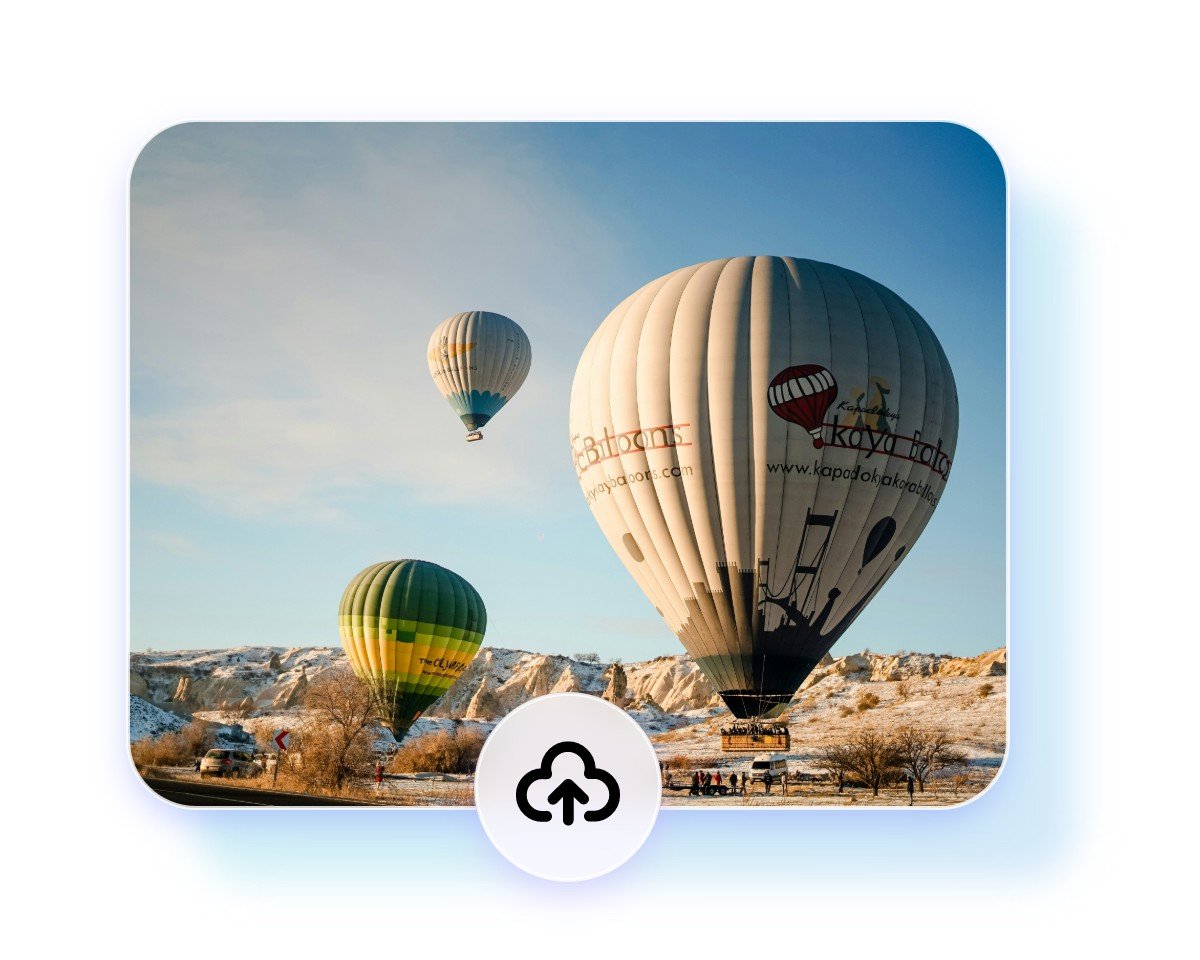
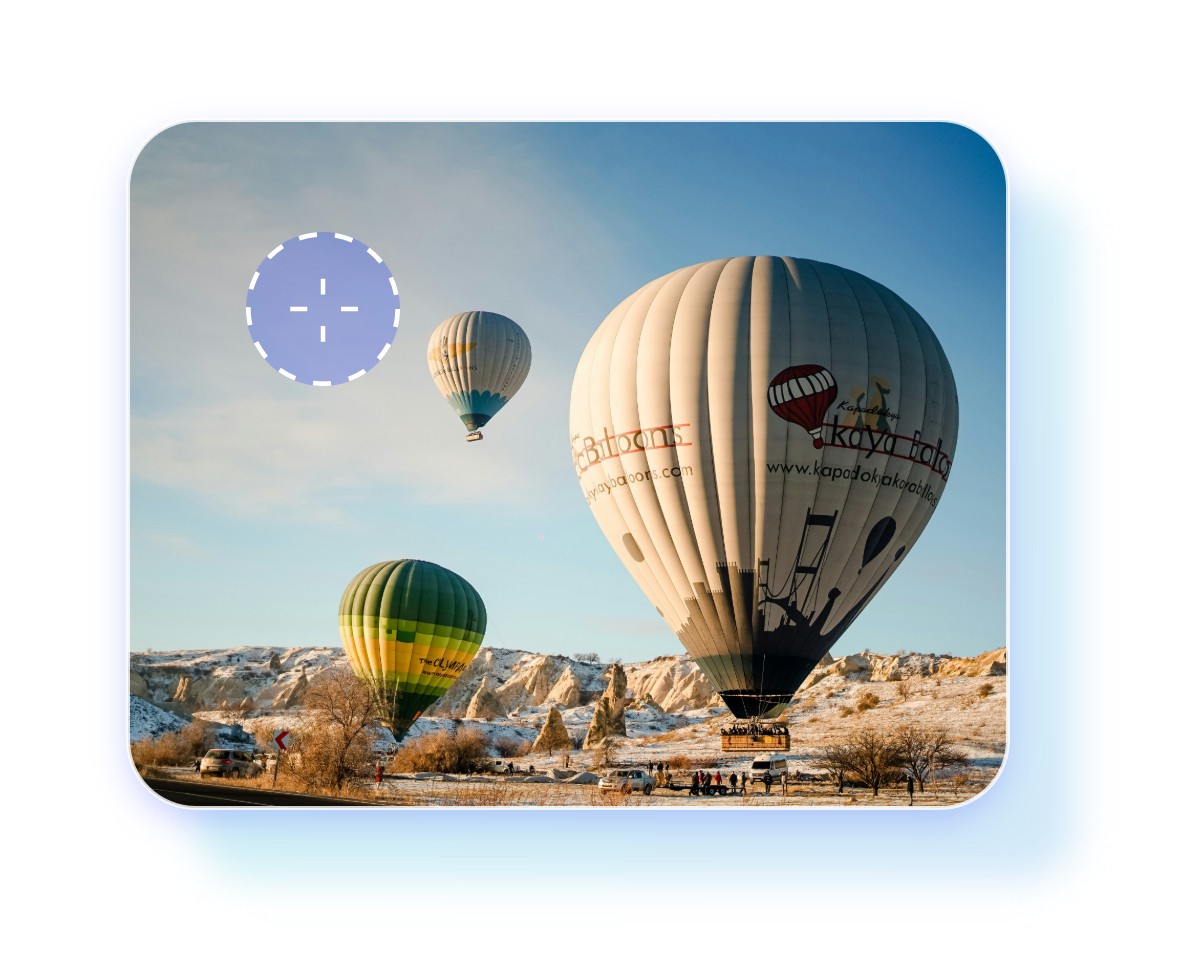
Upload your picture to Fotor’s photo editor with the clone tool.
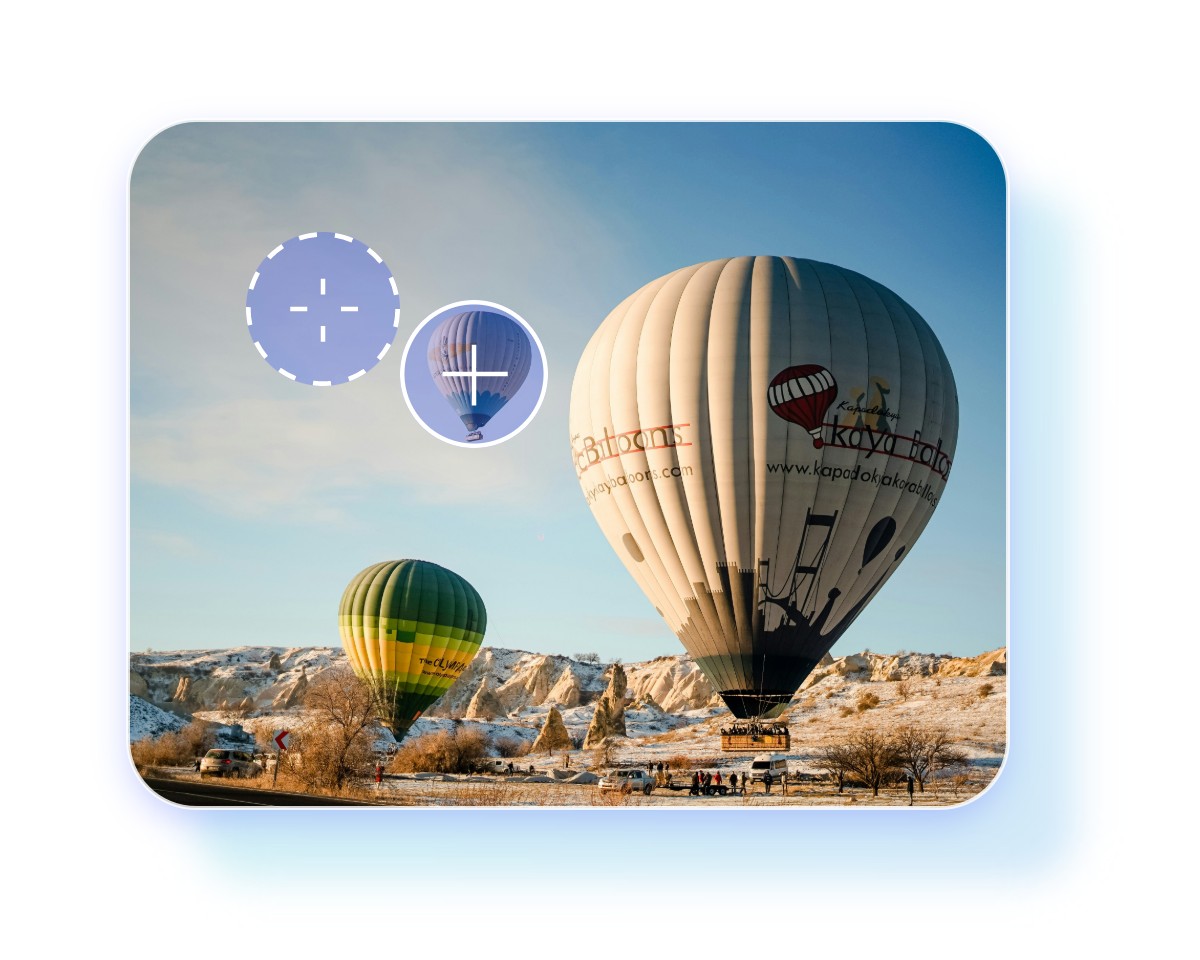
Find the sample point and click the copy brush to start the duplication.
Stroke the designated area of your picture with our clone tool to apply the effect from the duplication area. Customize the brush size and intensity based on your needs.
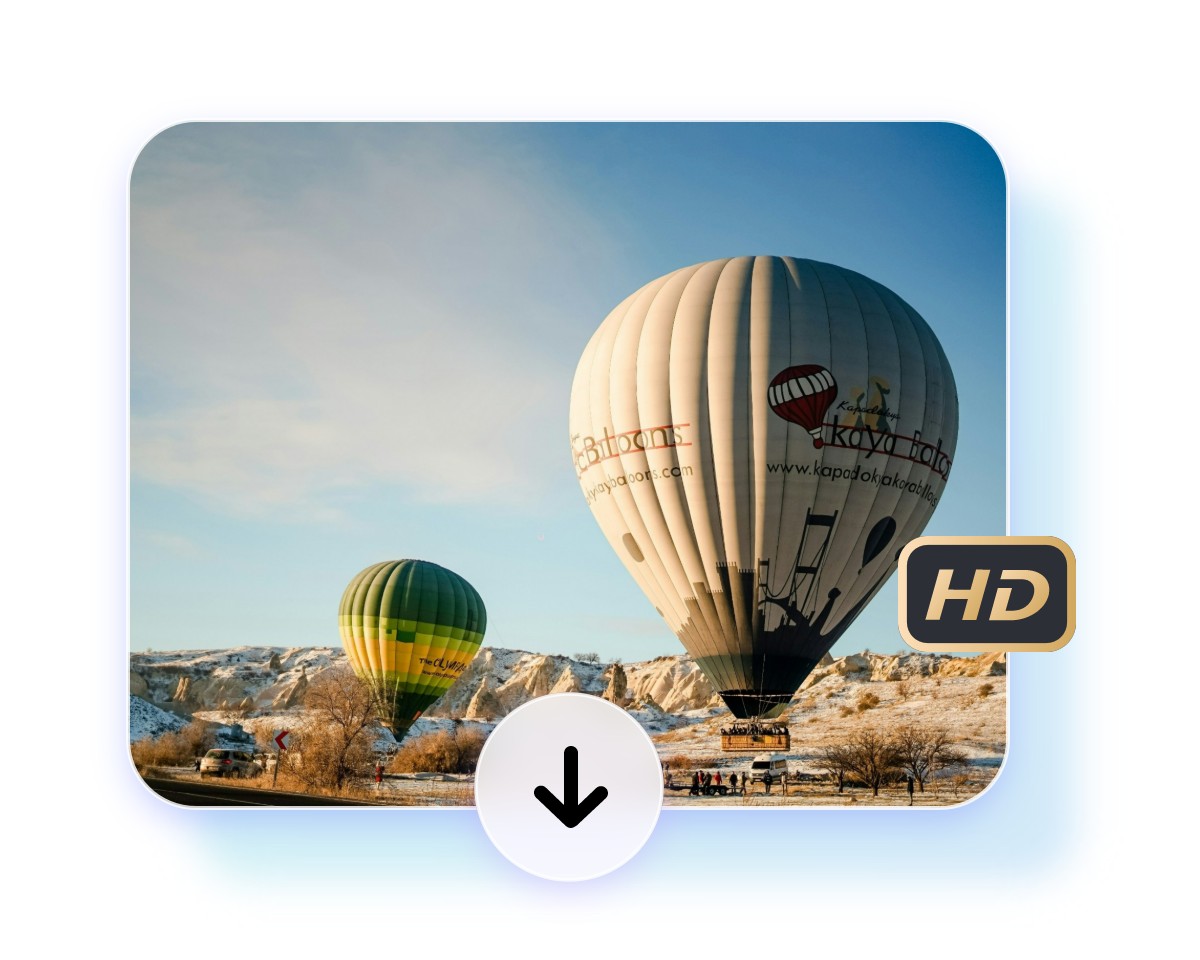
Preview the result and then press “Download” to save it.
Our clone tool can achieve the same effects as Photoshop does, but will be more convenient to use. Take advantage of our tool to conveniently repair texture, fill the background, restore old photos, remove unwanted objects and more.
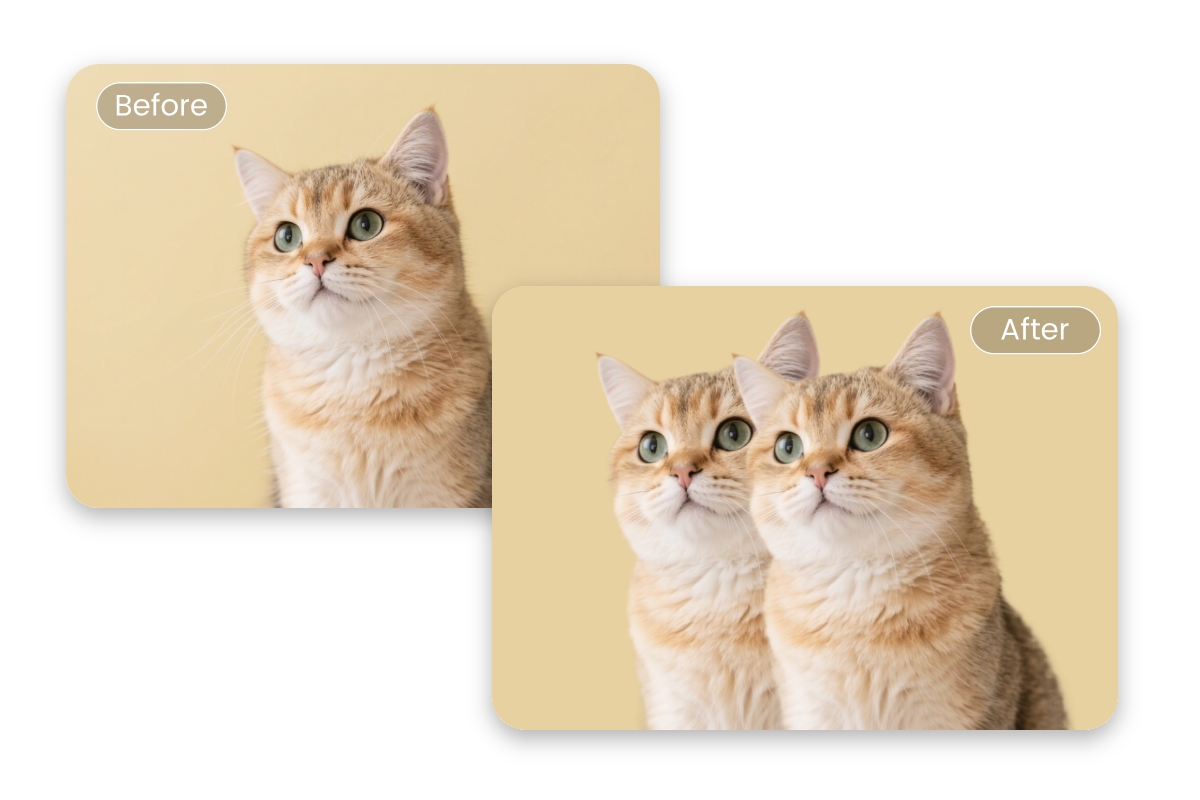
Our clone stamp uses a source-to-target pixel replication. It allows you to copy the pixels or texture from the sample point or cloning area with a replicate brush. Then, click it again to apply the effect to the designated area to seamlessly repair any texture in your photos. No software and complex editing skills are required to achieve non-destructive editing.
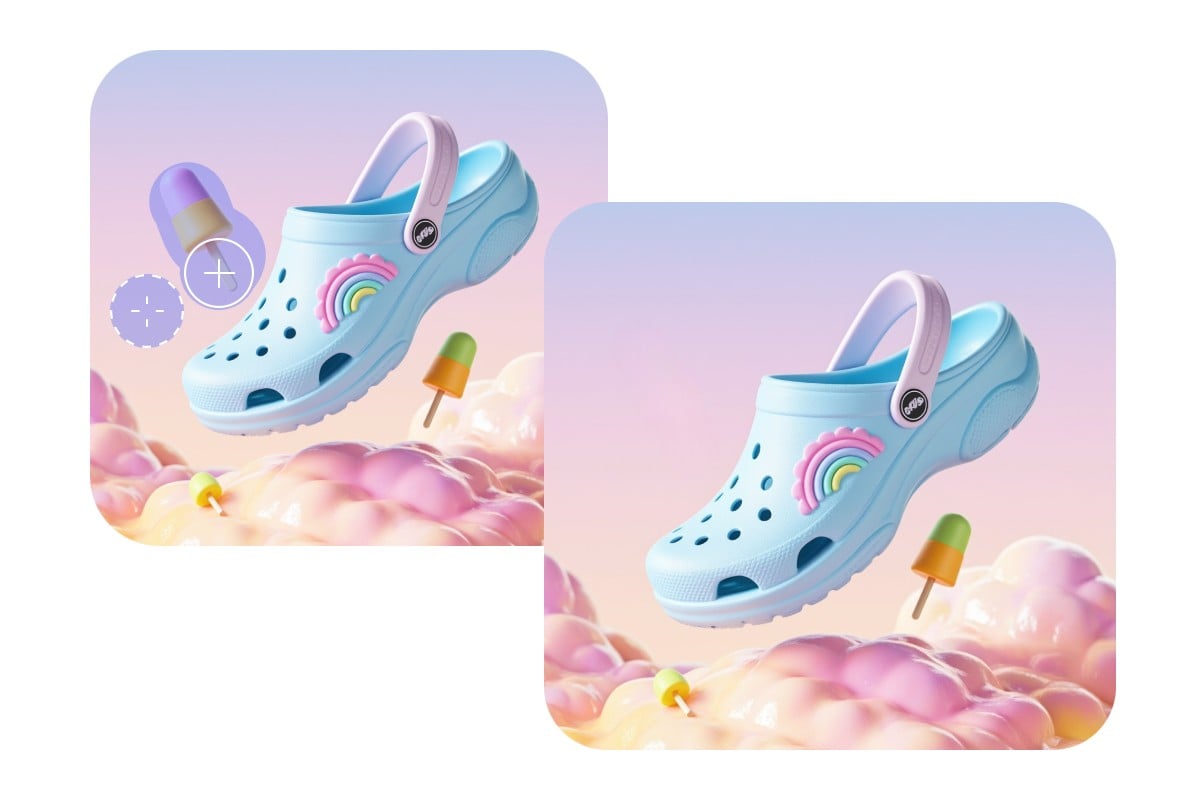
Cover up unnecessary elements or distractions with our clone photo editor. For example, copy and paste the non-distracting area to remove text from image without blurring or erase people from photo without leaving artifacts or smudges.
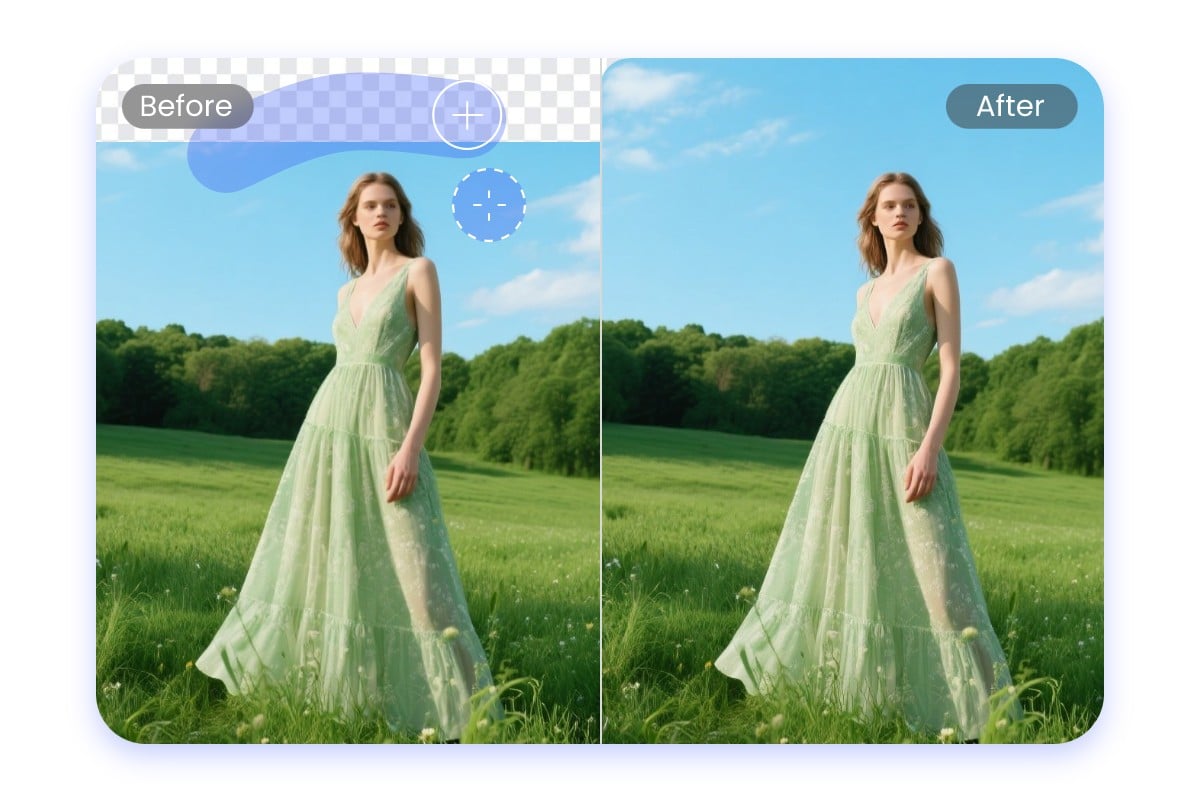
Duplicate the pixels of the source point and then apply the copied effect to extend the original background or fix the damaged or missing areas of your photo, especially your product photography.
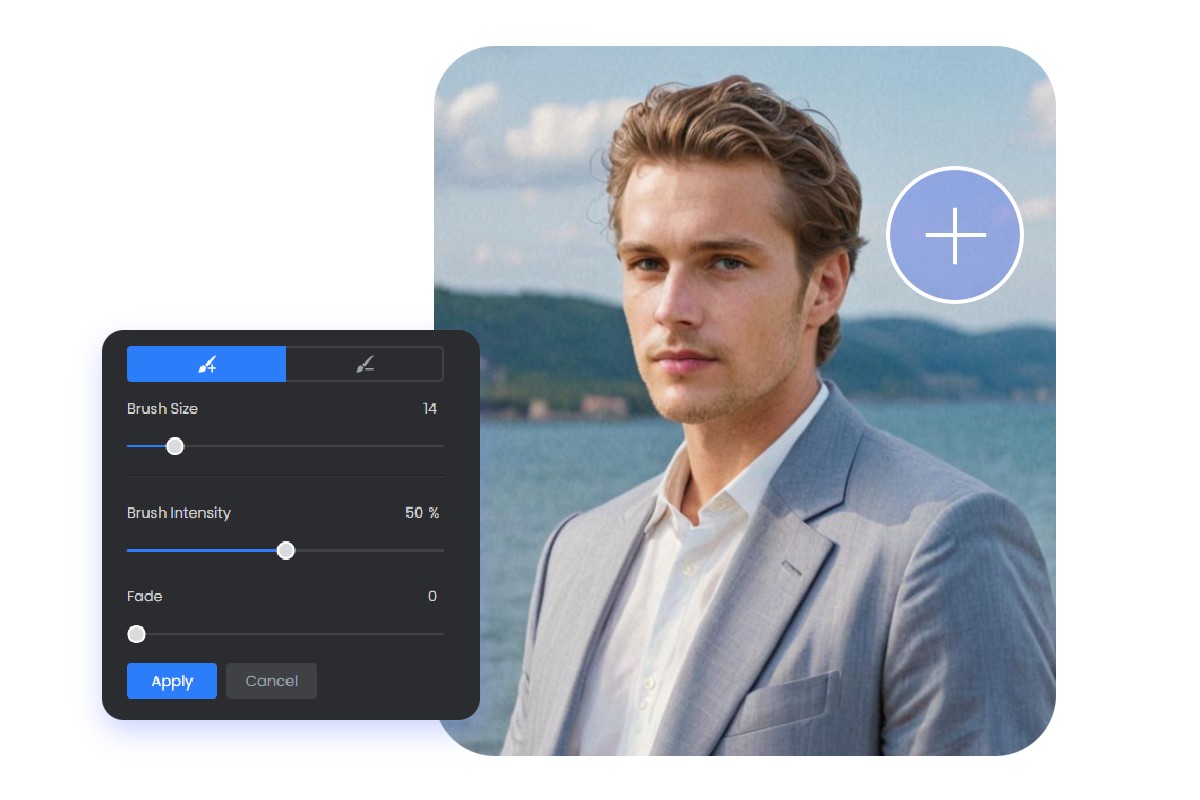
Our clone brush can be flexibly adjusted to help you with diverse requests, including its size and intensity. For example, you can make our copy stamp smaller to cover up the blemishes on a portrait and make it bigger to duplicate a large area to fill the background. Also, you can customize its intensity to decide how strong the final cloning effect is.
In addition to the aforementioned functionalities, our clone stamp can do more to help you with your photo editing.
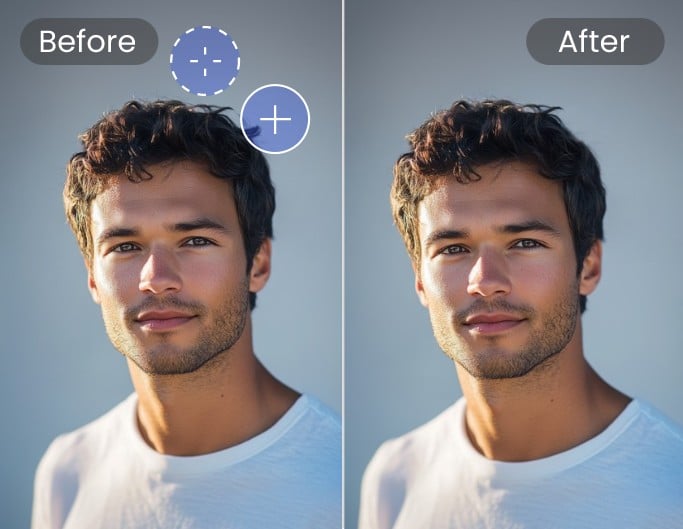
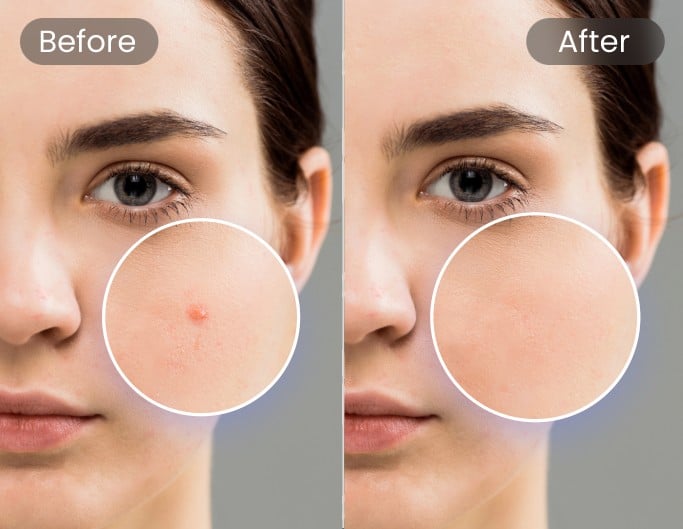
Clone the healthy skin texture to cover up the imperfections of your portrait, such as blemishes, spots, scars, wrinkles, etc.
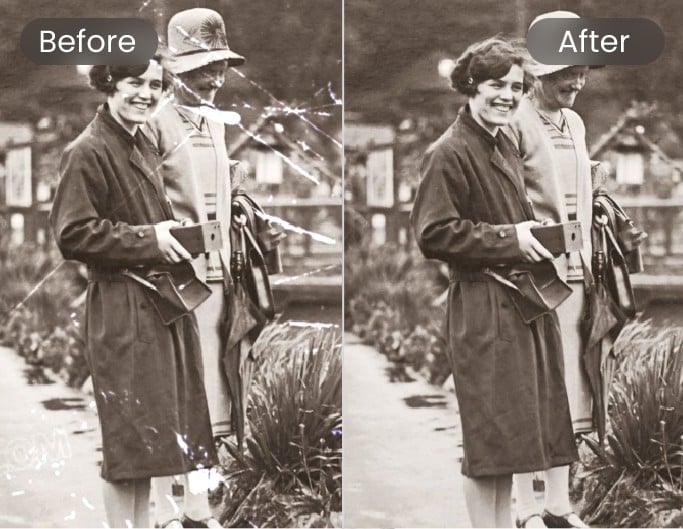
Duplicate undamaged texture and use it to restore old photos, such as fixing the folds, stains, scratches, cracks, faded areas or creases.
| Feature / Tool | Photoshop | Fotor |
| Platform | Desktop software (Windows/macOS) | Online app (no installation required and works on any device) |
| Pricing | Free trial plan Costly paid plans | Free credits Daily free rewards Budget-friendly paid plans |
| Ease of Use | Difficult | Super easy |
| Settings | Complex | Simple |
| Layer Support | Full support for layers and masks, which requires professional editing skills | No layers needed and edits are made on a single layer, which is simple for beginners |
| Brush Customization | Hardness, shape, size, angle, etc. | Size, intensity and fade |
| Additional Features | Yes. 100+ professional editing features that need editing skills | Yes. 100+ simple editing and AI features for everyone |
| Ideal for | Detailed retouching, professional restoration and photo manipulation | Quick and convenient image cloning and filling for various purposes |
| Suitable for | Professional photo editors | Users at any skill level |
Zoltán G.Fotor sticks to the most important parts of image editing... includes tools like a cloning brush and a 'Curves' option. The Beauty tab is where unique adjustments can be made to remove wrinkles or red-eye and tweak makeup to perfection.
BestReviews.net
Tony HoffmanFotor provides good tools for photo editing and design... The Crop Tool is interesting in that it lets you choose a shape... It offers crop presets for many social media platforms. I'm a fan of the Compare and Reset All options for when editing gets out of hand
PCMag
Hot in Social MediaFor a person who is very attentive to details and extremely particular, these features are heavenly... It provides the ability for non-designers to create powerful mesmerizing images easily and hassle-free.
Medium
The clone stamp is a tool that allows users to copy or "clone" pixels from one part of an image and paint them onto another part. It is mainly used for retouching, repairing, and duplicating image areas while preserving the texture, color, and structure of the original content.
Normally, it is a feature that belongs to several image editing software, such as Adobe Photoshop, After Effects, Illustrator and GIMP. Now, it can also be an individual tool presented by Fotor.
Here are some practical tips for using a clone tool effectively, which will help you achieve natural-looking, seamless edits and avoid common mistakes.
If your clone brush isn’t working, it is usually due to a simple setting or workflow issue. Here, we will mainly focus on the feature in Photoshop. Here are some top reasons for its malfunction:
1. Wrong Layer Selected
Solution: Set the tool’s sample option to “Current & Below.”
2. Sample Point Not Set
Solution: Hold down Alt (Windows) / Option (Mac) and click to set a source point before painting.
3. Low Brush/Flow Opacity
Solution: Check the Opacity and Flow settings in the toolbar and then set them to 100%.
4. Incorrect “Sample” Setting
Solution: Make sure the Sample dropdown is set to “Current Layer” (for working directly) or “Current & Below” (for retouching on a new layer).
5. Wrong Blend Mode
Solution: Set the Clone Stamp’s blend mode to “Normal.”
6. Cloning from a Hidden or Locked Layer
Solution: Ensure the source layer is visible and unlocked.
7. Brush Too Small or Hardness Too Low
Solution: Increase brush size and hardness if it seems to be not cloning anything.
8. Selection Is Active (but not obvious)
Solution: Press Ctrl + D (Windows) / Cmd + D (Mac) to deselect. If a selection is active, the tool will only work inside it.
9. Cloning in the Wrong Color Mode
Solution: Ensure the image is in a compatible color mode (e.g., RGB or CMYK).
10. Layer Visibility or Mask Interference
Solution: Check if a layer mask or adjustment layer is interfering. Try disabling them temporarily to test.
Yes, this kind of tool is inherently destructive — but only if used directly on the original image layer. That means it permanently alters the pixels of your image, and once saved, changes can't be reversed. To avoid these situations, you can use a new blank layer, work with layer masks or use adjustment layers separately.
However, if you are using Fotor, there is an “Undo” to reverse your cloning and pasting. Hence, you can always go back to the previous step if a mistake happens.
To stop clone stamp from looking repetitive, you should use multiple sample points, vary the stamp size and clone from different nearby areas. Also, you need to apply short strokes instead of long continuous strokes to break patterns. By doing so can you use a clone stamp tool correctly.
Although both tools can be used for object removal, retouching and repair, there are some differences between them.
An object remover normally adopts AI or content-aware fill technology to automatically replace the chosen subject with the surrounding pixels. For modern tools, it is usually built into non-destructive workflows since no blurriness will be seen now after the removal.
A clone tool requires a user to manually copy the area surrounding the target one and apply the duplicated pixels to cover the latter zone. The content is literally not erased but covered. However, if you mistakenly paint on the original layer and save the project, this tool can be destructive.
For tiny, precise details (skin texture, edges, patterns, etc.), a clone stamp is more accurate since it provides high precision control by allowing you to personalize the duplicate brush to adjust specific areas. Also, a clone tool targets exact and seamless texture duplication rather than new content creation, helping you maintain visual consistency.
Generative Fill, however, is better for larger areas or creative reconstruction because it will always invent new textures based on advanced AI technology.
Yes. Fotor’s clone stamp tool can help you accurately remove people or objects from photo. You need to:
You can flexibly customize the brush size and intensity of clone stamp tool. Here are some suggestions for the brush settings if you are trying it.
Our clone brush is your secret weapon for flawless image editing. Copy and blend pixels seamlessly to clean up, duplicate or repair any area with precision—no design skills required. Give your photos a polished and professional look today.