Corneliae Ruvalcaba
Corneliae Ruvalcaba

What Is Vibe Marketing? Definition, Examples & Al Workflow

Vibe marketing is a visual-driven approach where you bring the creative idea, and AI scales it into on-brand, studio-quality content—across every channel, instantly. Unlike traditional marketing that leads with product specs, vibe marketing leads with feeling: the right aesthetic, the right mood, the right cultural signal.

Try for Free
Showcase

What Is Vibe Marketing?

What on earth is vibe marketing? Give me 60 seconds and I'll let you talk about it like a pro.

Vibe marketing is a visual-driven approach where you bring the creative idea, and AI scales it into on-brand, studio-quality content—across every channel, instantly. Unlike traditional marketing that leads with product specs, vibe marketing leads with feeling: the right aesthetic, the right mood, the right cultural signal.

Fotor's AI Vibe Marketing Platform puts this approach into practice—combining content generation, editing, and optimization into a seamless AI visual workflow so brands can turn creative intent into consistent, high-converting visuals faster than ever.

At its core, it is a strategic shift from "What you sell" to "How you make them feel." Instead of dry technical specs, it uses a curated blend of lighting, color palettes, and cultural symbols to arouse immediate emotional resonance.

Today, AI has transformed this "high-end art" into a fast, scalable growth hack. It allows brands to build an immersive Worldview where the product is not just an item, but an essential part of an aspirational lifestyle.

Why Vibe Marketing is a Game-Changer for Startups

For startups and DTC brands with limited budgets, vibe marketing provides a "shortcut" to compete with global giants:

  1. Breaking Through Ad Fatigue: In 2026, standard ads are ignored. High-vibe visuals act as "scroll-stoppers" because they look like high-quality organic content, reducing the friction of the "Hard Sell."
  2. Instant Brand Authority: First impressions are everything. Professional, atmospheric visuals can make a month-old startup possess the same "Premium Feel" as an established luxury house, building instant trust.
  3. Maximizing Perceived Value: Vibe marketing shifts the focus from price to value. By creating an aspirational aura, you move your product away from price-wars and allow for higher margins—people pay for the dream, not just the material.
  4. The "Shareability" Growth Hack: Aesthetic content is the fuel of social media. When your visual vibe is strong, users will "Save" and "Share" your posts as lifestyle inspiration, giving you massive organic reach for $0.Vibe Marketing vs. Traditional Marketing

The 4 Main Types of Vibe Marketing

To build a successful vibe, you must first define your visual vocabulary. Most high-performing brands today leverage one of these four pillars:

Aesthetic-Driven (Visual Perfection): This is about the "Look." It relies on strict color palettes and trendy aesthetics like Clean Girl, Cyberpunk, or Quiet Luxury.

  • Best for: Beauty, high-end fashion, and tech gadgets.

Mood-Driven (Emotional Storytelling): This focuses on the feeling of a moment. Whether it's the peacefulness of a "Slow Morning" or the mystery of "Midnight City," it uses lighting and texture to evoke specific emotions.

  • Best for: Home decor, fragrances, and wellness products.

Lifestyle-Driven (Aspirational Identity): This sells a "Worldview." It’s not about the product, but who the user becomes—an eco-warrior, a high-flying CEO, or a digital nomad.

  • Best for: Outdoor gear, organic food, and subscription services.

Subculture-Driven (Community Belonging): This uses niche symbols and aesthetics like Y2K, Anime, or Dark Academia to signal to a specific tribe: "We are one of you."

  • Best for: Streetwear, collectibles, and gaming peripherals.

Who Benefits Most from Vibe Marketing?

DTC & Small Businesses: Those needing to look "Big" and professional on a lean budget.

Social Media Sellers: Anyone on TikTok or Instagram where the "vibe" dictates the click-through rate.

E-commerce Teams: Brands needing to produce thousands of high-end ads at scale without hiring expensive creative agencies.

Vibe Marketing vs. Traditional Marketing

Dimension
Traditional Marketing (The Old Way)
Vibe Marketing (The Winner)
First Impression
"It's an ad" (Skip)
"It's a cool vibe" (Stop)
Consumer Mindset
Logical & Critical
Emotional & Immersive
User Action
Immediate scroll-past
Save, Like, and Share
Core Asset
Product Features
Brand Worldview
Speed & Cost
Weeks & High Spend
Days & AI-Powered Efficiency

3 Steps to Find Your Brand’s Visual Soul

Before you start generating AI visuals, you need a "Vibe Strategy." Here is how successful startups define their aura:

The Keyword Filter: Pick three adjectives that describe the feeling of your product (e.g., Sultry, Minimalist, Urban). These will be your primary AI prompts.

Identify Your "Aesthetic Anchor": Is your brand's home on the sun-drenched coast of Italy or in a neon-lit futuristic city? Defining a consistent "Setting" ensures your vibe doesn't feel scattered.

The Empathy Test: Ask yourself: "What is my customer doing 5 minutes before they use my product?" If they are waking up, your vibe should be Fresh & Ethereal; if they are hitting the gym, it should be High-Energy & Gritty.

Why AI is the "Secret Weapon" for Small Brands in Vibe Marketing

The word "vibe" often brings to mind expensive production sets and elite creative agencies. However, AI has leveled the playing field. It’s no longer about how big your budget is, but how effectively you use AI to scale your brand's aesthetic.

Democratizing High-End Aesthetics: AI removes the technical barrier. You don't need to be a pro-photographer to generate visuals that look like they belong in a luxury magazine.

From Concept to Campaign in Seconds: In the fast-paced world of social media, trends fade in days. AI’s unmatched speed allows small brands to launch "vibe-consistent" campaigns instantly, keeping them at the center of the conversation.

The End of High Production Overheads: By replacing physical studio rentals and complex logistics with AI-driven environments, startups can reinvest their saved budget into product innovation and growth.

7 Vibe Marketing Examples for Inspiration

One of the biggest advantages of vibe marketing is that you no longer need a large creative team to build a recognizable brand aesthetic. AI product image generator allow you to quickly turn a defined vibe into scalable marketing assets for personal branding, product pages, social media content, and ads.

You can define a brand vibe first, then use AI tools to generate consistent visuals that align with it. Below are seven vibe marketing examples and how different AI tools can help bring them to life.

Soft Luxury Vibe

Luxury jewelry and fashion brands often focus on elegant lighting, editorial-style compositions, and sophisticated model photography. This vibe is commonly used for jewelry, watches, handbags, and premium fashion accessories.

How to bring it to life with AI:

  • Create polished campaign visuals with AI fashion models.
  • Enhance textures, remove imperfections, and apply luxury lighting effects.
  • Keep luxury branding consistent across listings, ads, and social posts.

Clean Natural Vibe

Soft beige tones, natural light, and minimal compositions are hallmarks of modern skincare brands. The goal is to make every image feel premium, calm, and inviting. This works especially well for skincare, wellness, cosmetics, and minimalist lifestyle products.

How to bring it to life with AI:

  • Remove distractions and enhance product details with AI product photo editor.
  • Generate multiple product angles, close-ups, and lifestyle shots automatically.
  • Keep colors, fonts, and brand elements consistent across all images and posts.

Y2K Fashion Vibe

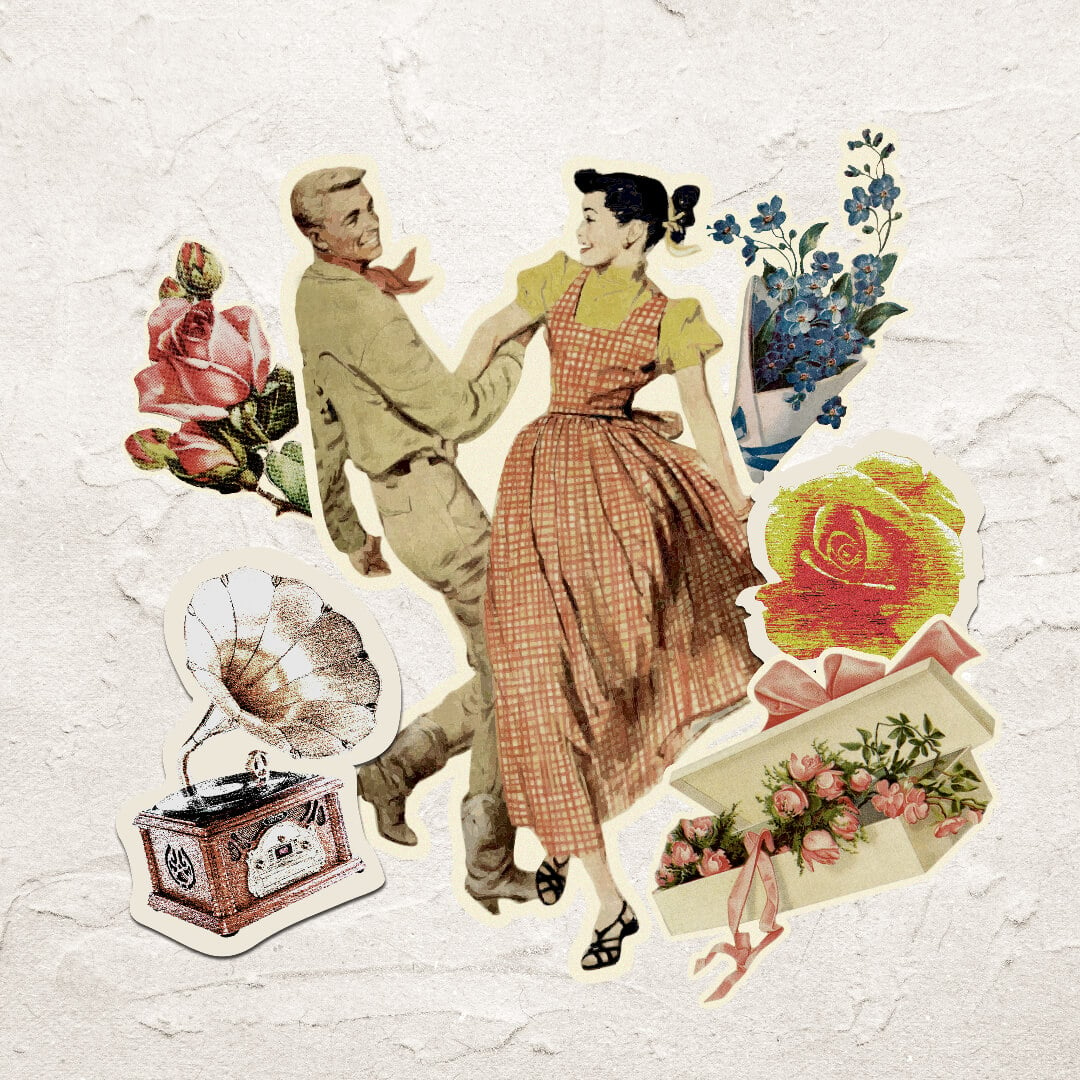
This vibe is bold, playful, and nostalgic, featuring flash photography, metallic tones, collage-style layouts, and energetic social content. This style is ideal for Gen Z fashion brands, accessories, and streetwear products.

How to bring it to life with AI:

  • Use AI-generated fashion models in trendy poses for campaign visuals.
  • Apply stylistic filters to create retro flash-photo effects.
  • Turn product links into short-form fashion ads, unboxing videos, or UGC-style content for social platforms.

Cozy Handmade Vibe

Warm lighting, wooden textures, soft shadows, and emotionally comforting visuals are common in handmade and home decor brands. This vibe works particularly well for candles, handmade jewelry, ceramics, coffee products, and home decor items.

How to bring it to life with AI:

  • Generate cozy lifestyle backgrounds and remove clutter from product images with AI background changer.
  • Create multiple scene variations for seasonal campaigns.
  • Maintain warm color palettes and brand consistency across all visuals.

Futuristic Tech Vibe

Modern tech brands often use dark backgrounds, cinematic lighting, and sleek product-focused visuals to create a premium futuristic feel. This vibe is especially useful for electronics, gadgets, gaming accessories, and smart devices.

How to bring it to life with AI:

  • Generate dramatic close-ups, floating product shots, and multiple angles.
  • Enhance details, refine lighting, and create polished presentations.
  • Turn product links into spotlight product videos and short tech-style promos.

Tranquil Countryside Life

This vibe highlights slow living, peaceful rural scenery, and a deep connection with nature. This aesthetic is often used by personal lifestyle bloggers, wellness creators, and homestead-focused social media accounts aiming to communicate simplicity and balance.

How to bring it to life with AI:

  • Generate serene rural landscapes, farmhouse scenes, and nature-based lifestyle images or videos.
  • Remove distractions and enhance natural light to create soft, airy compositions with AI video enhancer.
  • Build seasonal content sets (spring fields, autumn harvests, winter quiet scenes) for consistent storytelling.

Cinematic Travel Filming

This vibe focuses on storytelling through motion and atmosphere, turning ordinary travel moments into film-like scenes. This style is ideal for travel influencers, digital nomads, and content creators who want their social media to feel like a visual diary or cinematic journey rather than simple documentation.

How to bring it to life with AI:

  • Transform travel photos into cinematic frames with depth of field, motion blur, and color grading.
  • Generate short-form video sequences from static images to simulate travel vlogs or film trailers with AI video generator.
  • Enhance your video's details, such as skies, lighting contrast, and environmental effects.

The AI Vibe Implementation Workflow (With Fotor)

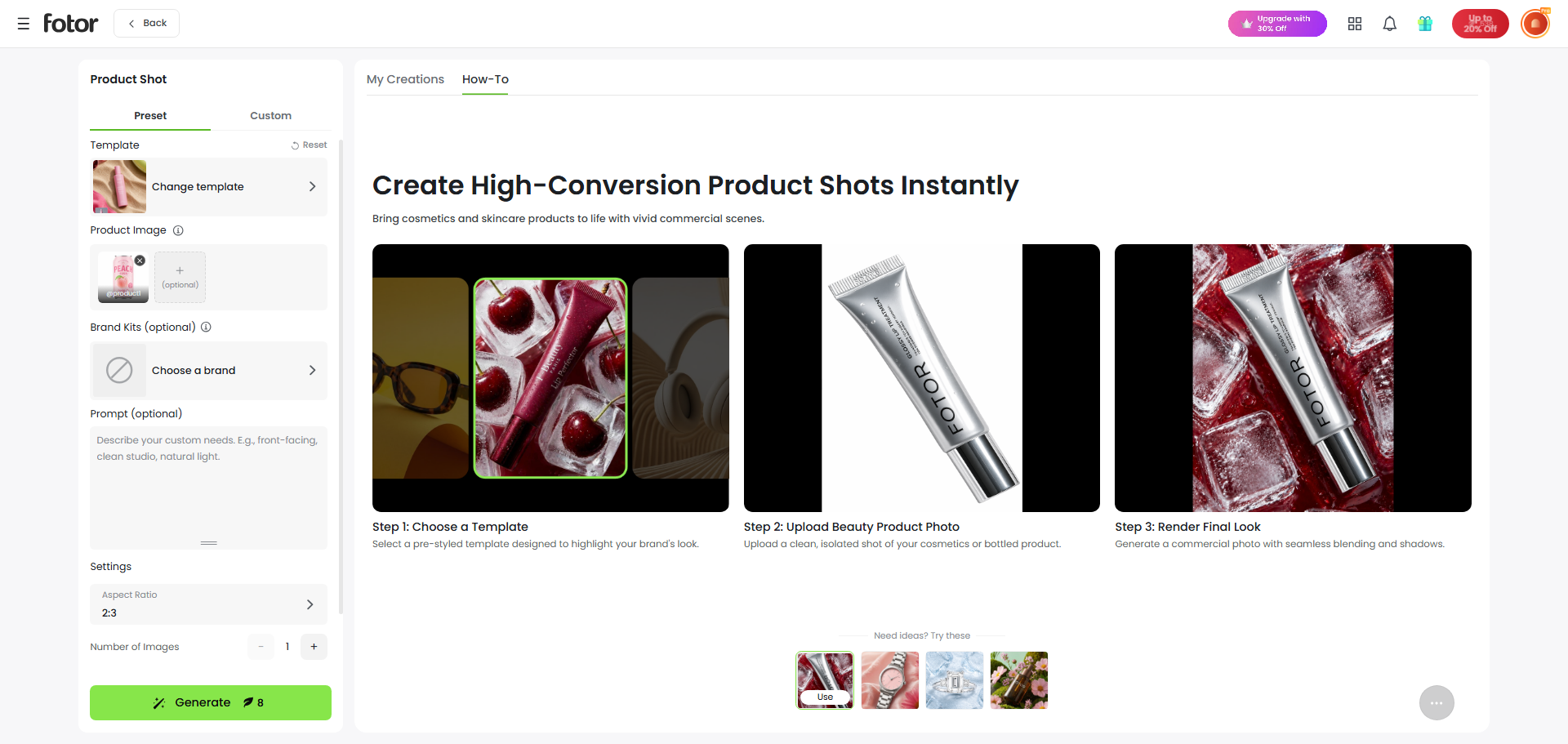
Translating a visual aesthetic into scalable, high-converting assets doesn't require expensive studios. An integrated suite like Fotor AI Vibe Marketing Platform automates this process through a simple 3-step AI workflow:

Step 1: AI Product Photo Editor (Scene & Lighting)

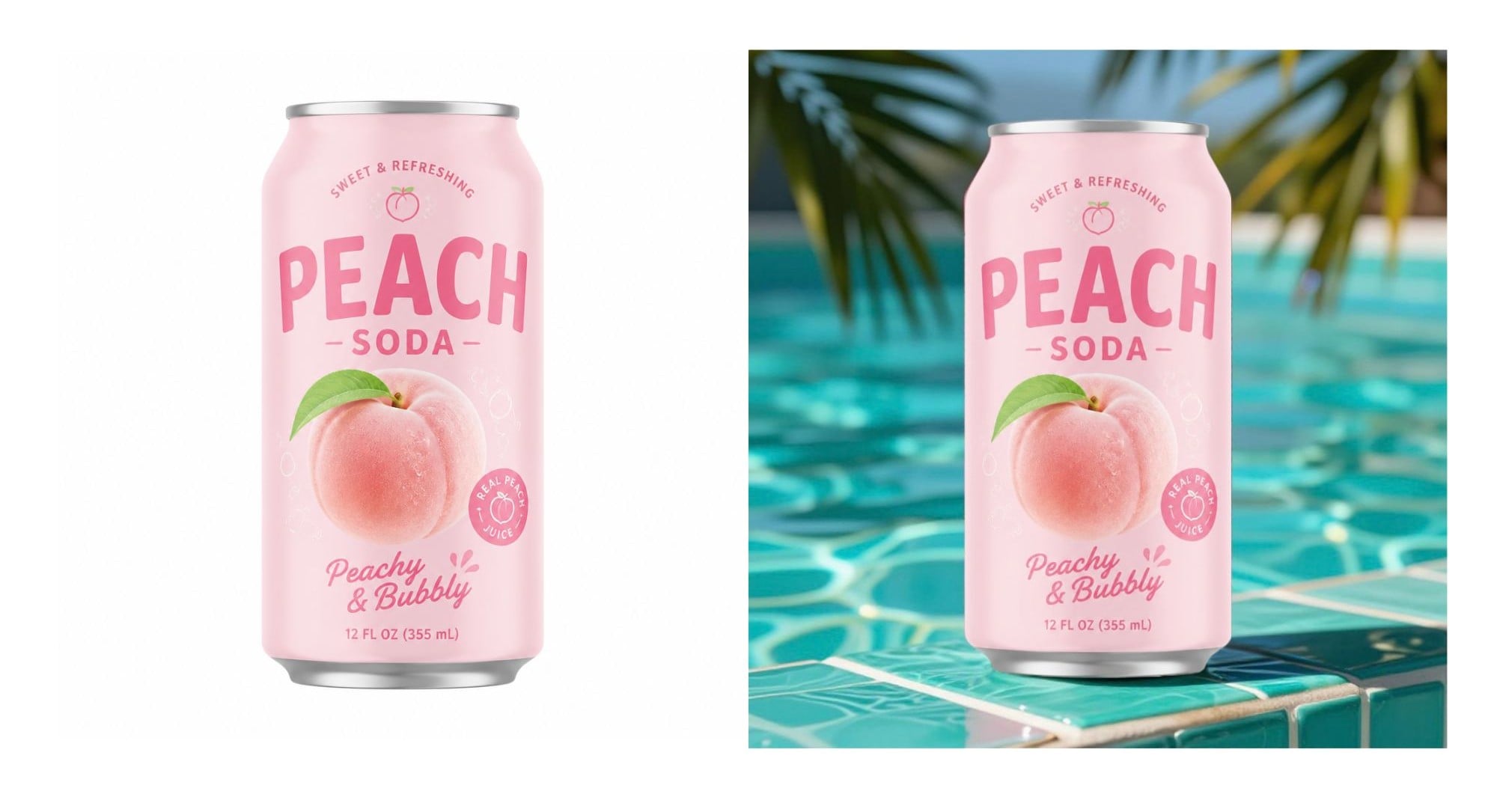
Upload a simple product snap. Fotor's AI removes clutter and seamlessly integrates your product into tailored lifestyle backdrops. It automatically adjusts shadows, reflections, and studio lighting to match your target vibe—whether it's Clean Natural marble or Futuristic Tech neon.

Step 2: AI Virtual Model Generator (Emotional Context)

Model try-ons drive higher engagement than static flat-lays. Fotor’s AI fashion model generator converts flat apparel and accessory photos into realistic on-model shots. Choose from diverse model presets and poses that directly reinforce your brand's aesthetic without physical photo shoots.

Step 3: Smart AI Listing Generator (Automated Asset Suite)

Generate a full multi-angle listing with Fotor's AI listing generator in minutes. The system produces hero shots, close-ups, and model views in one go, automatically maintaining consistent color palettes, background tones, and lighting across every image.

Best Practices & AI Limitations

  • Preserve Product Truth: Ensure AI background generation does not alter physical garment colors or textures, which can cause customer returns.
  • Maintain Color Lock: Keep core brand HEX codes consistent across seasonal scenes to avoid visual clutter.
  • Human Curation: Use AI to accelerate production, but perform a final human review to guarantee aesthetic alignment.

Conclusion: The Future of Branding is a Feeling

Vibe marketing is no longer just a trend for high-end fashion houses; it is a fundamental survival strategy for every modern brand. In a world where attention is the scarcest resource, the ability to sell a "feeling" is your strongest competitive advantage.

The barrier to entry—expensive studios and elite photography—has finally collapsed. With the evolution of Fotor’s AI-driven marketing suite, creating an immersive brand world is now limited only by your imagination, not your budget. You’ve mastered the strategy; now it’s time to let AI bring your brand's unique vibe to life.

FAQs

Is there any tool to help with vibe marketing?

Yes. Fotor is a top choice for vibe marketing, as it offers specialized features like the AI product photo editor, virtual model generator, and AI product listing generator. These tools allow you to create high-end marketing visual assets instantly without needing a professional production team.

Why are Gen Z and Millennials obsessed with "vibes" in shopping?

For younger generations, shopping is an emotional experience rather than just a transaction. "Vibes" represent a brand's identity and values. Gen Z and Millennials prefer brands that tell a story and offer a specific lifestyle aesthetic, which builds a deeper emotional connection and trust than traditional hard-sell advertising.

Is vibe marketing still effective in 2026?

Yes. In 2026, with the saturation of AI-generated content, consumers are even more drawn to authentic-feeling "vibes" that resonate with their personal style. In fact, with the rapid evolution of AI tools, vibe marketing is more promising as they lower the barrier to high-end visual content creation. Even small businesses and DTC (Direct-to-Consumer) can use AI to consistently deliver unique, emotionally resonant vibes can stand out in a saturated market.

How much does vibe marketing cost for small businesses?

With the help of AI, vibe marketing it is highly affordable nowadays. By using AI tools to transform simple snapshots into professional assets, small businesses can execute a high-end vibe marketing strategy for just the cost of a software subscription.

Can I use AI-generated images for commercial use on e-commerce platforms?

Generally, yes. Most mainstream e-commerce platforms like Amazon, Shopify, and Etsy allow AI-generated images as long as they accurately represent the physical product. When using Fotor, the AI-generated backgrounds and virtual models are designed for commercial use, helping you scale your business while staying compliant with platform guidelines.