

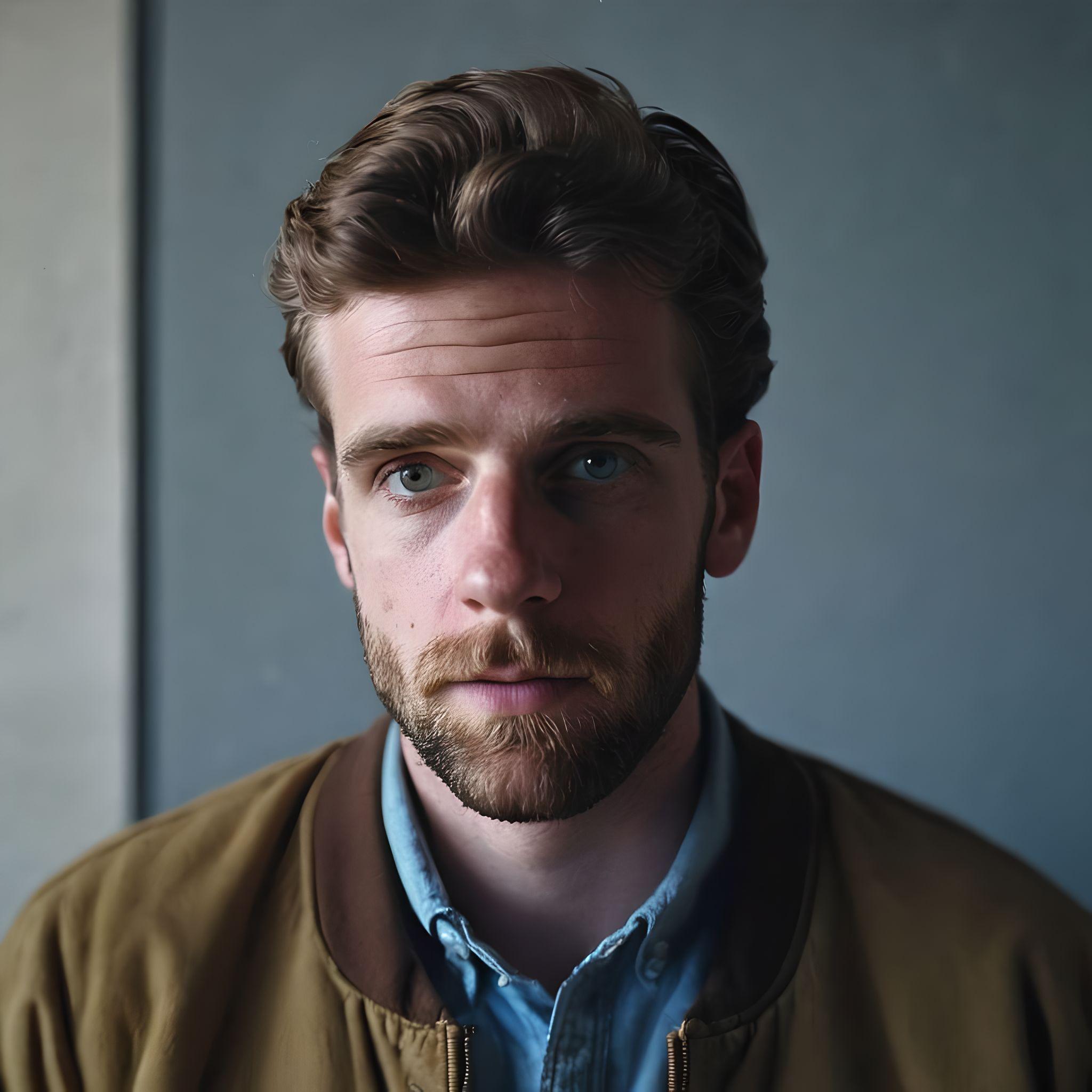
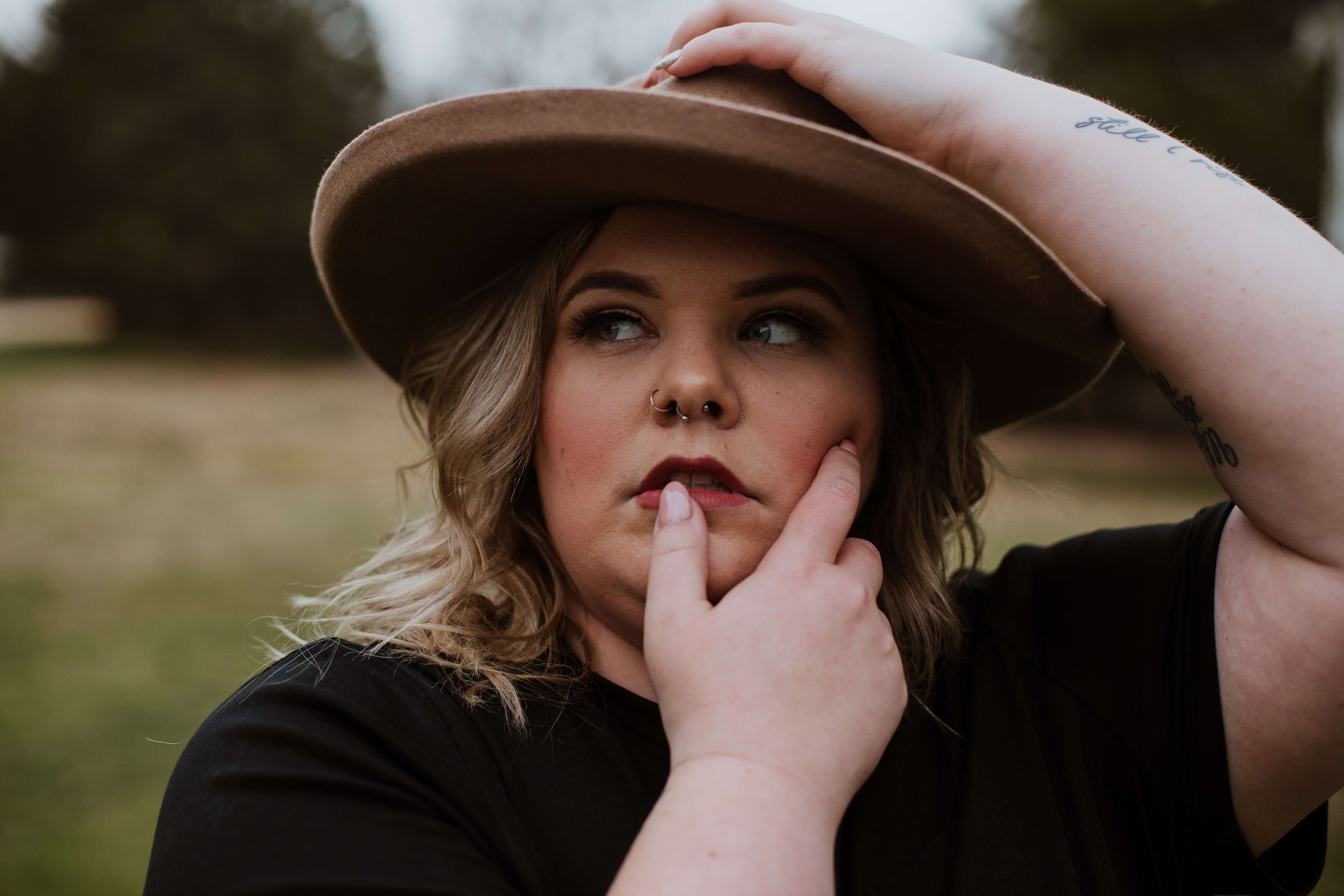
When you take several selfies, you look at them and may sometimes wonder "Why do I look fat in pictures?"
Maybe your face appears wider than you expected, your body looks different from what you see in the mirror or the photo simply doesn't feel like "you." It is a frustrating experience, and one that almost everyone has had at some point.
The good news is that photos don't always tell the whole story. The way a camera captures perspective, lighting, timing and facial expressions can all influence how you appear in a single image. In many cases, it is the result of the way the photo was taken instead of your body that is truly changing.
This doesn't mean cameras are inaccurate, nor does it mean you should compare yourself to every picture you see. Understanding how photography works can help explain why some photos feel more flattering than others and, more importantly, how to create images that better reflect how you actually look.
In this guide, you will learn the science behind why people often look different in photos, common photography myths and practical techniques to help you take more natural-looking pictures.
Personal Reasons: Why Do I Look Fat in Pictures?
Normally, when people ask, "Why do I look fat in pictures?", they are usually asking a bigger question: "Why don't I look the way I expected?" The answer is surprisingly simple. A photograph captures only one frozen moment from one camera position using one particular lens. Real life is much more dynamic.
When people see you in person, they observe you from different angles as you move, talk and change expressions. Their brains combine all of those moments into one overall impression. A camera, however, records only a fraction of a second. That single frame can exaggerate certain features or capture an awkward expression that doesn't represent how you normally look.
Several personal and natural factors influence how you appear in a photo.
Clothing Matters
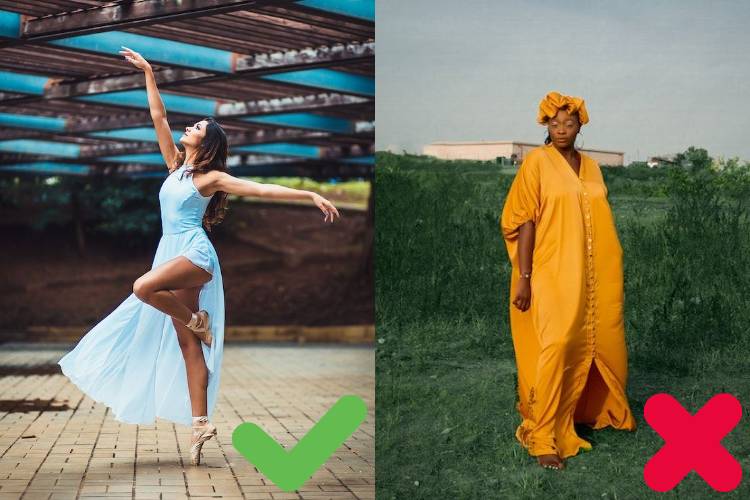
Why do I look bigger in pictures? Wrong clothes! Avoid loose, fat clothes, which can make you look visually bulky. Choosing well-fitting clothes will make you look slimmer.
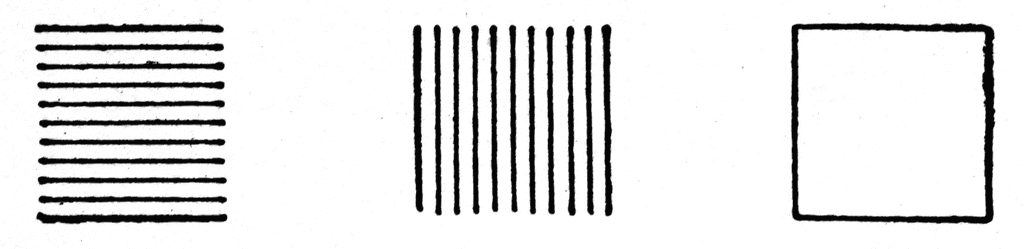
According to the Helmholtz illusion, a square with horizontal stripes looks taller and narrower than one with vertical stripes, so when buying clothes, you can also buy clothes with horizontal stripes, which will visually slim you down.
According to the principle of irradiation illusion, when you wear the same clothes, darker styles such as black, blue and red will make you visually appear to have a slimmer body. Conversely, lighter colors, such as white, make the body appear larger.
Pose
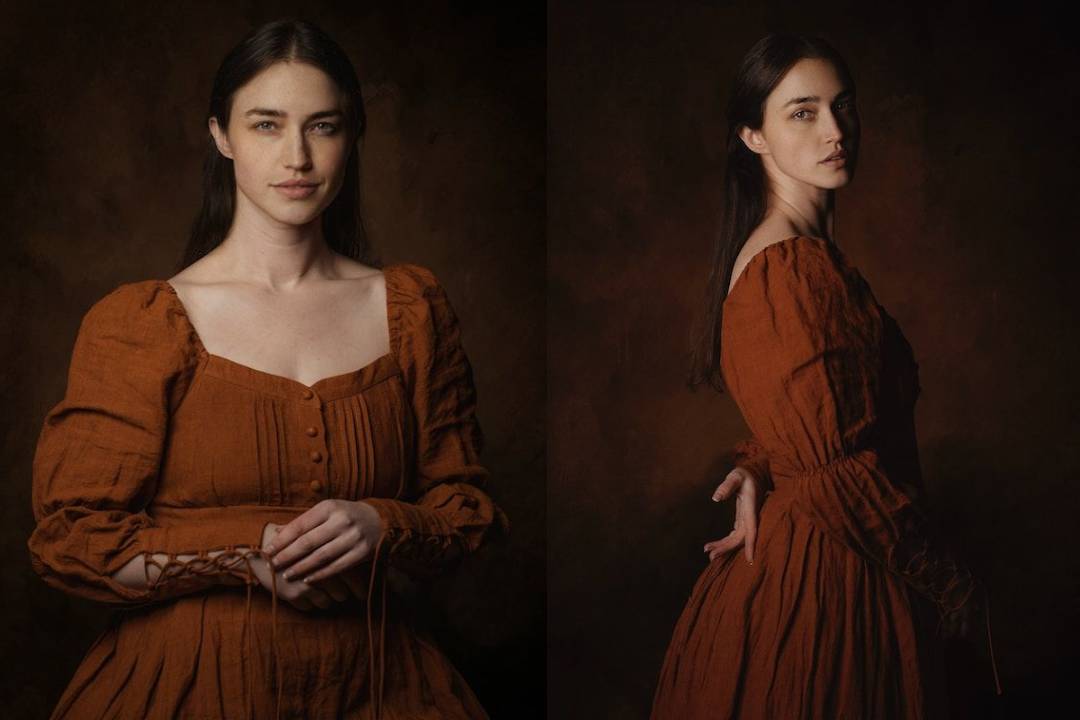
Try some poses that can make your face and body virtually thinner.
Keep your chin up to avoid a double chin. Usually, when you are shooting, your eyes look straight ahead at the camera will be able to avoid a double chin very well. Remember to keep your chin up and look flat at the camera so that you look presentable and confident.
Try taking pictures with your body sideways, which will make you look slimmer in front of the camera, or when taking selfies, hold your phone at a 45-degree angle above your face to make your face look thinner.
Photo Lighting
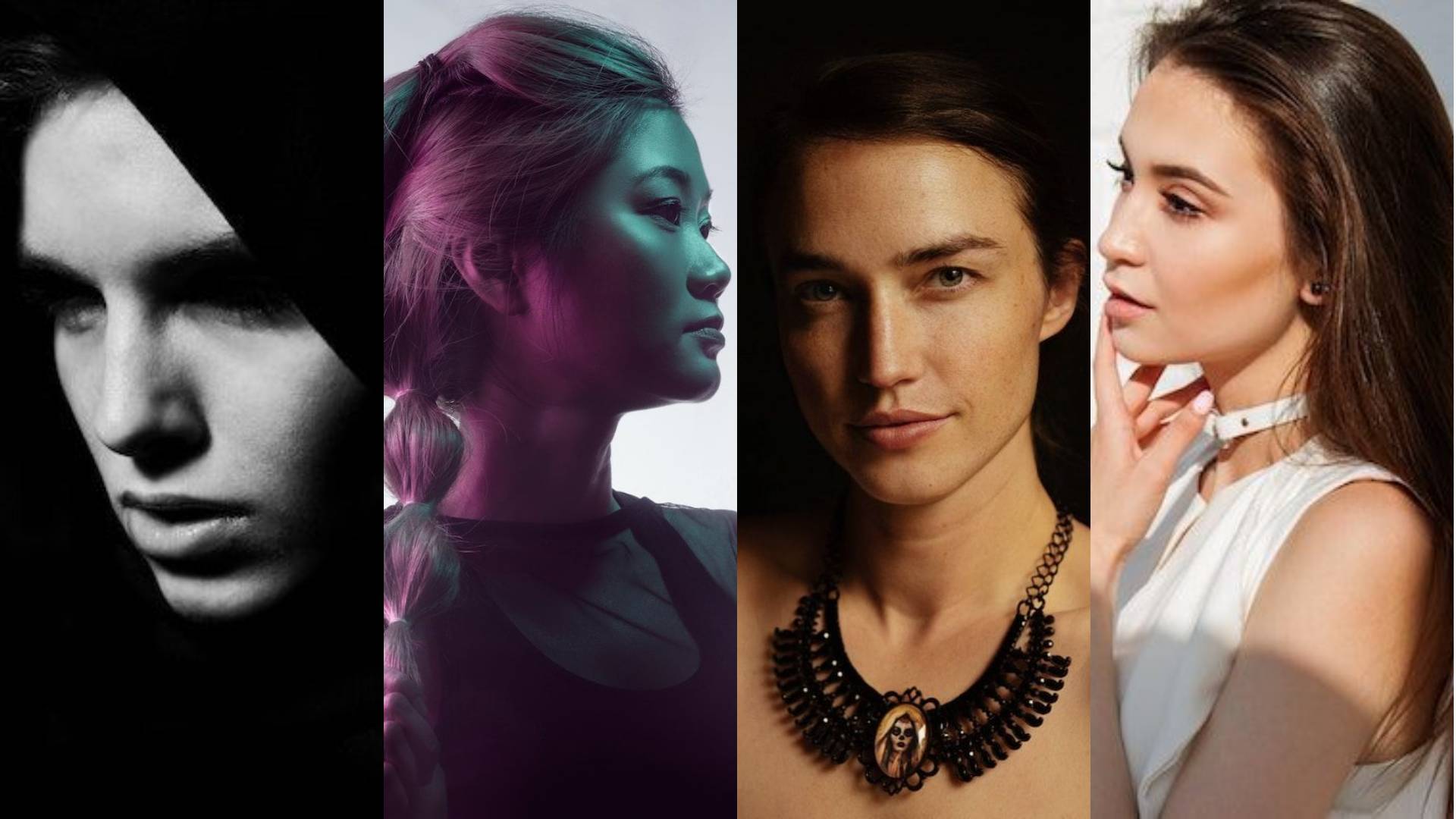
Photo lighting is also crucial for your photo shoot. You can find the photography studio will always take photos with lots of light equipment. Because the light and shadow on your face will affect your facial outline. It is the same as the shadow palette in makeup. Good photo studio lighting will make your face slim and exquisite.
If you have no ideas about photo lighting, that doesn’t matter. You don’t need to learn complex photo lighting skills. We can learn how to use light to shape our facial outline. When you are taking selfies, try to move around to find the best light and shadow on your face.
Camera Reasons: Do Cameras Really Add 10 Pounds?
You have probably heard the saying, "The camera adds 10 pounds." It is one of the most common photography myths, but it isn't literally true.
Cameras don't add weight.
What they do change is the way your body appears from a particular angle, distance and lens. Several photography factors can make someone appear wider or less defined than they do in person.
Lens Distortion
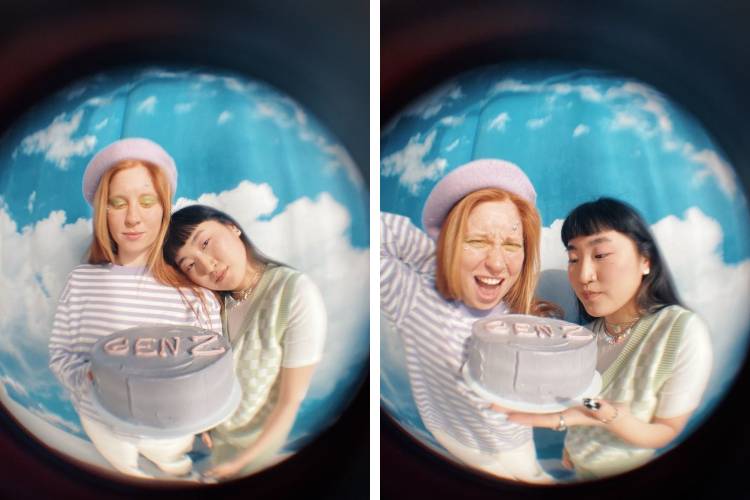
What is lens distortion? It means deformation or distortion of the image happens during the process of photography or videography due to the improper design or use of the lens.
Most smartphone cameras use wide-angle lenses. When the camera is very close to the subject, nearby body parts appear larger relative to everything else. For example, faces may appear rounder; shoulders can seem broader or arms may look larger.
This is a result of perspective rather than body shape. Move the camera farther away and you will see these proportions become much more natural.
Different Focal Lengths
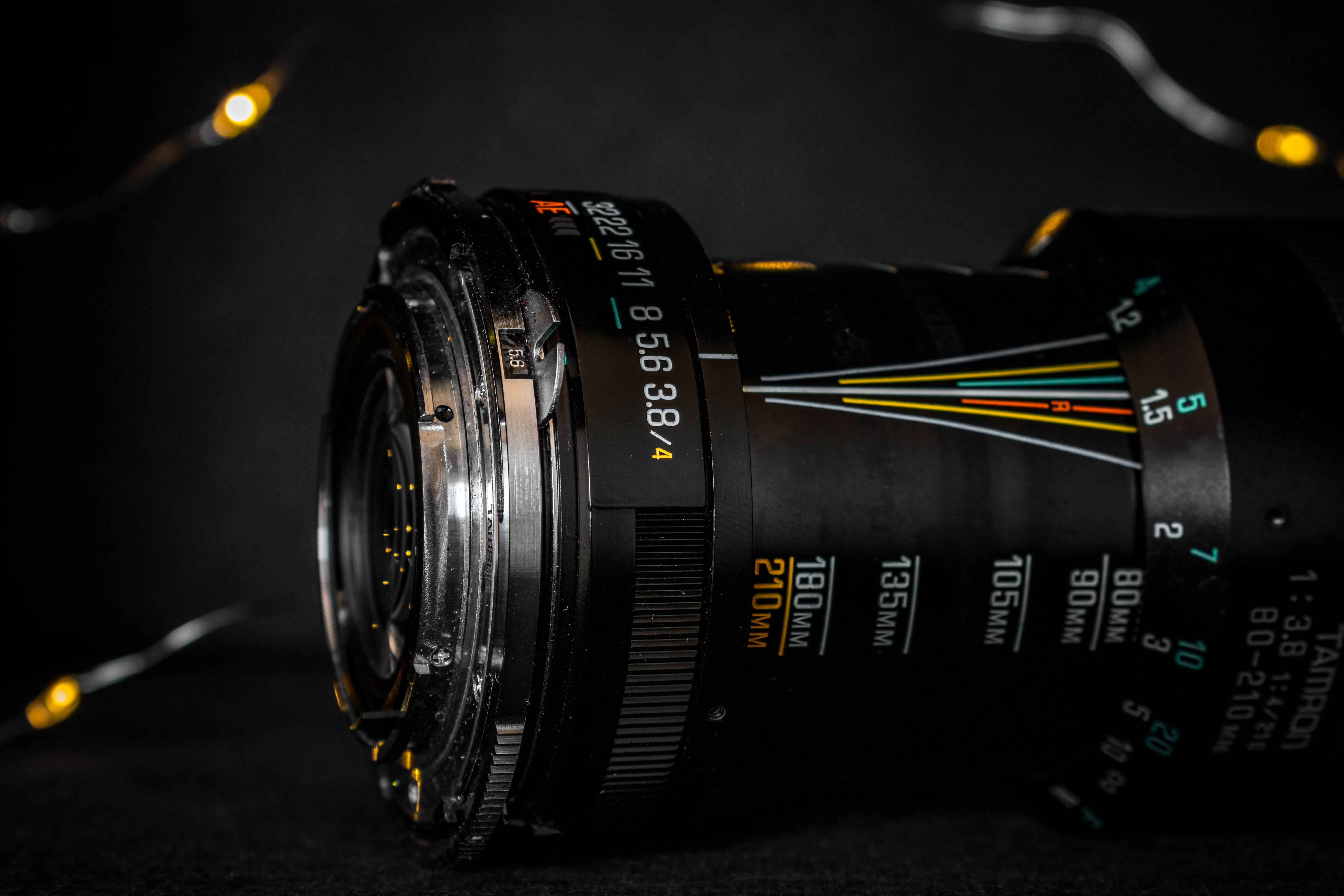
Many people assume the lens is responsible for every distortion. In fact, the distance between the camera often leaves an even greater impact on the subject.
A portrait taken from two meters away generally looks more balanced than one taken from only thirty centimeters away, even if both are captured with the same phone. Whenever possible, you can increase the shooting distance and crop the image afterward if necessary. These simple adjustments usually create a more natural perspective.
Camera Angle
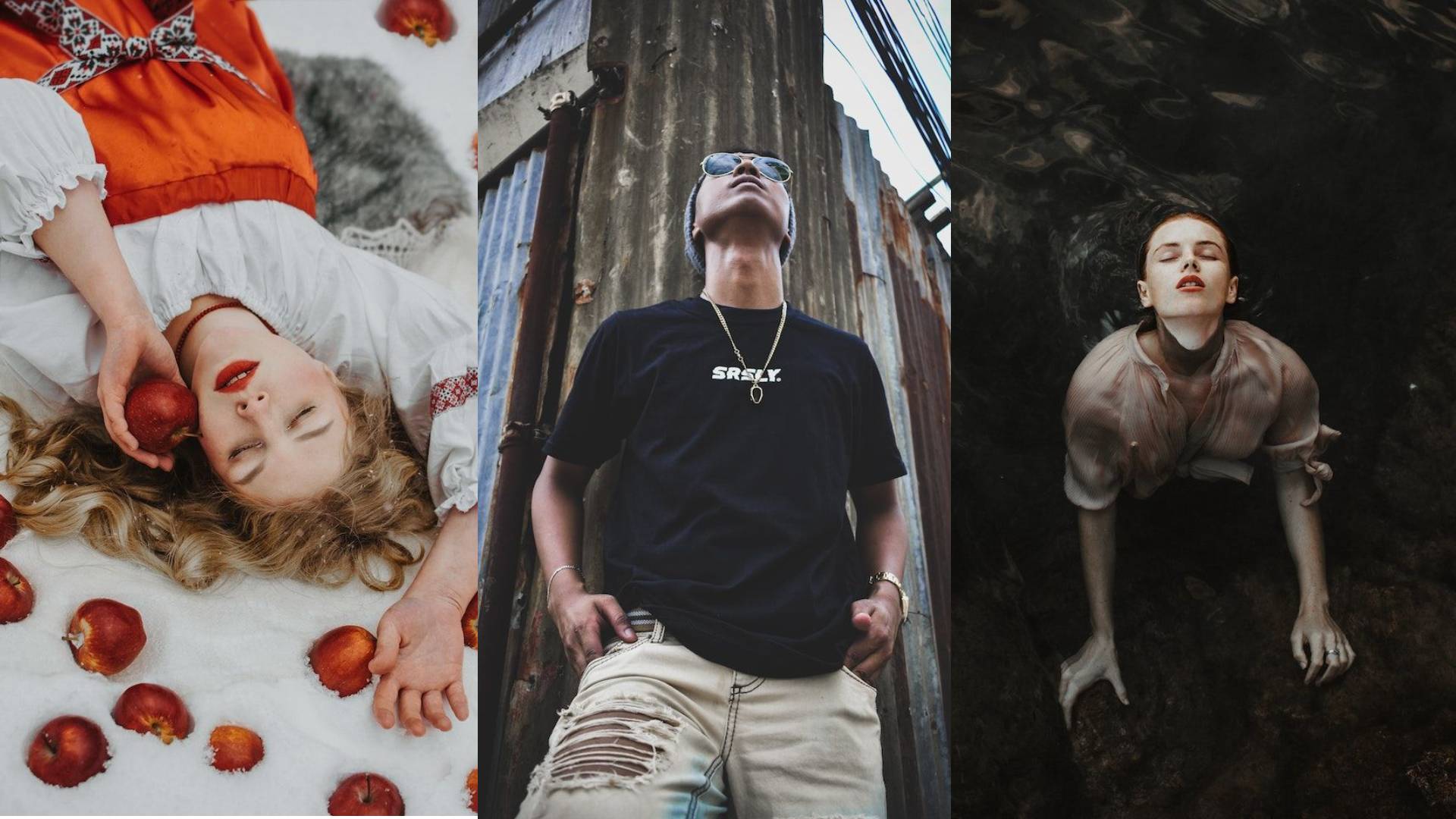
The position of the camera influences body proportions. For instance, a camera placed below eye level can make the lower body look larger, while a camera held far above the subject may create unnatural facial proportions.
For most portraits, placing the camera around eye level or just slightly above usually produces the most balanced result.
Therefore, rather than thinking, "The camera adds 10 pounds," it is more accurate to say that the camera records one perspective, some of which are simply more flattering than others. Understanding that difference can make it easier to judge photos more objectively and avoid assuming that every unflattering picture reflects how you actually look.
Why Do I Look Different in Photos Than in the Mirror?
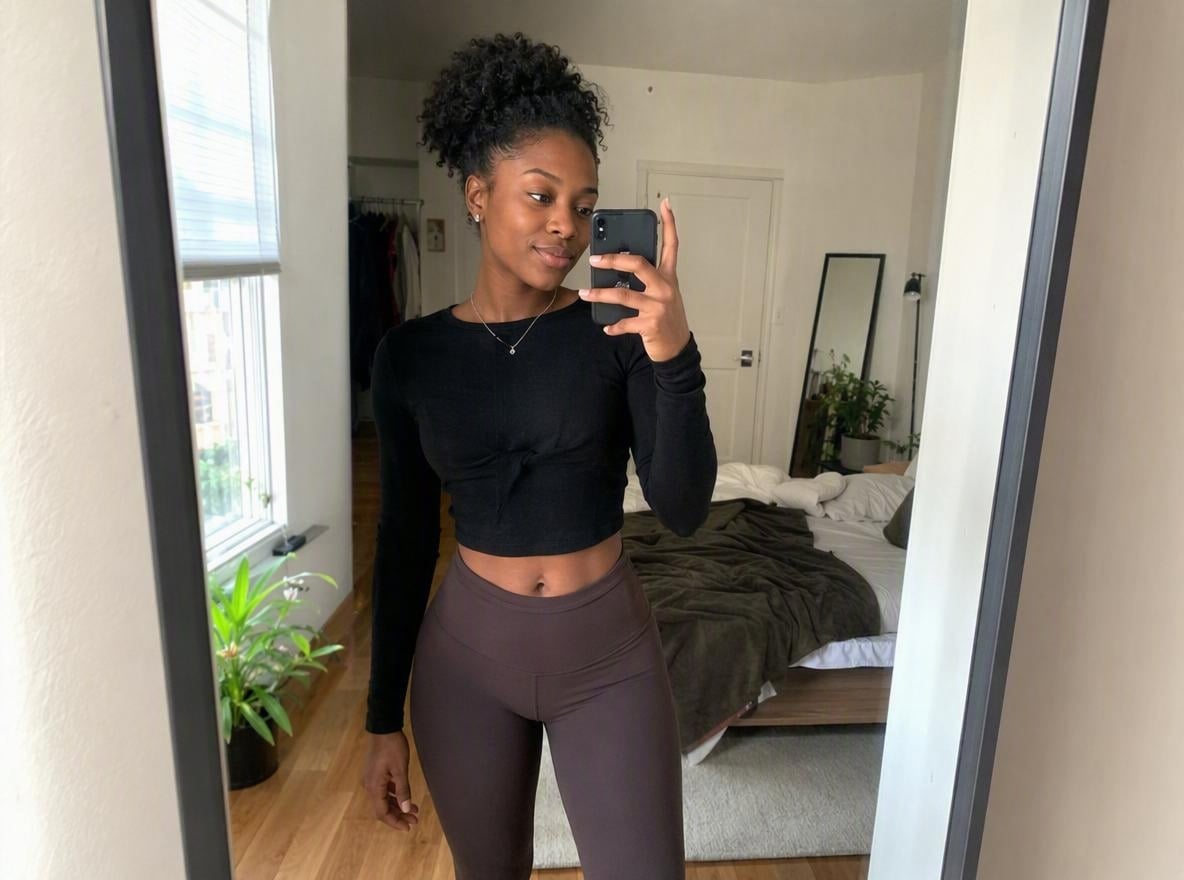
Many people notice that they look one way in the mirror and another way in photos. It's easy to wonder which one is more accurate. The truth is that neither shows the complete picture.
A mirror gives you a live, reversed reflection that changes as you move. A photo captures a single moment from one fixed perspective. Because the two experiences are so different, it's normal for them to create different impressions.
You are Used to Seeing Your Mirror Image
One reason photos can feel unfamiliar is that you're used to seeing yourself in a mirror. Every day, you brush your teeth, style your hair or get ready in front of a mirror. Over time, your brain becomes familiar with that reflected version of your face.
A photograph, however, usually shows your face the way other people see it, not reversed. Even though the differences are subtle, they can make the photo seem "wrong" simply because it looks unfamiliar to you. Psychologists sometimes refer to this as the mere-exposure effect: we tend to prefer things that we see more often, including our own reflection.
A Mirror Shows Movement, Not Just One Moment
When you look in the mirror, you are constantly moving. You smile, blink, adjust your posture and change your expression naturally. Your brain combines all of these moments into one overall impression.
A photo freezes only one fraction of a second. That instant might capture you while you are talking, blinking or shifting your posture, which might be something other people would hardly notice in real life. This is one reason why a single photo can feel less flattering than seeing yourself in motion.
Photos Flatten a Three-Dimensional Face
Our faces have depth, contours and subtle shadows. A camera turns that three-dimensional scene into a two-dimensional image. Depending on the lens, lighting and shooting angle, some facial features may appear more prominent while others seem flatter.
Professional portrait photographers carefully control these factors to create images that feel balanced and natural. However, casual snapshots don't always have that advantage.
Which One Is More Accurate?
People often ask whether the mirror or the camera shows their "real" appearance.
Virtually, both are limited. A mirror reverses your image and lets you view yourself dynamically. A camera, however, captures one angle, one moment and one set of lighting conditions. How people actually see you is somewhere in between. They observe you from different angles, in changing light and over time rather than a single frozen frame.
Understanding this can make it easier to see photographs as one interpretation of your appearance rather than a final judgment.
Photography Tips That Help You Look More Natural in Photos
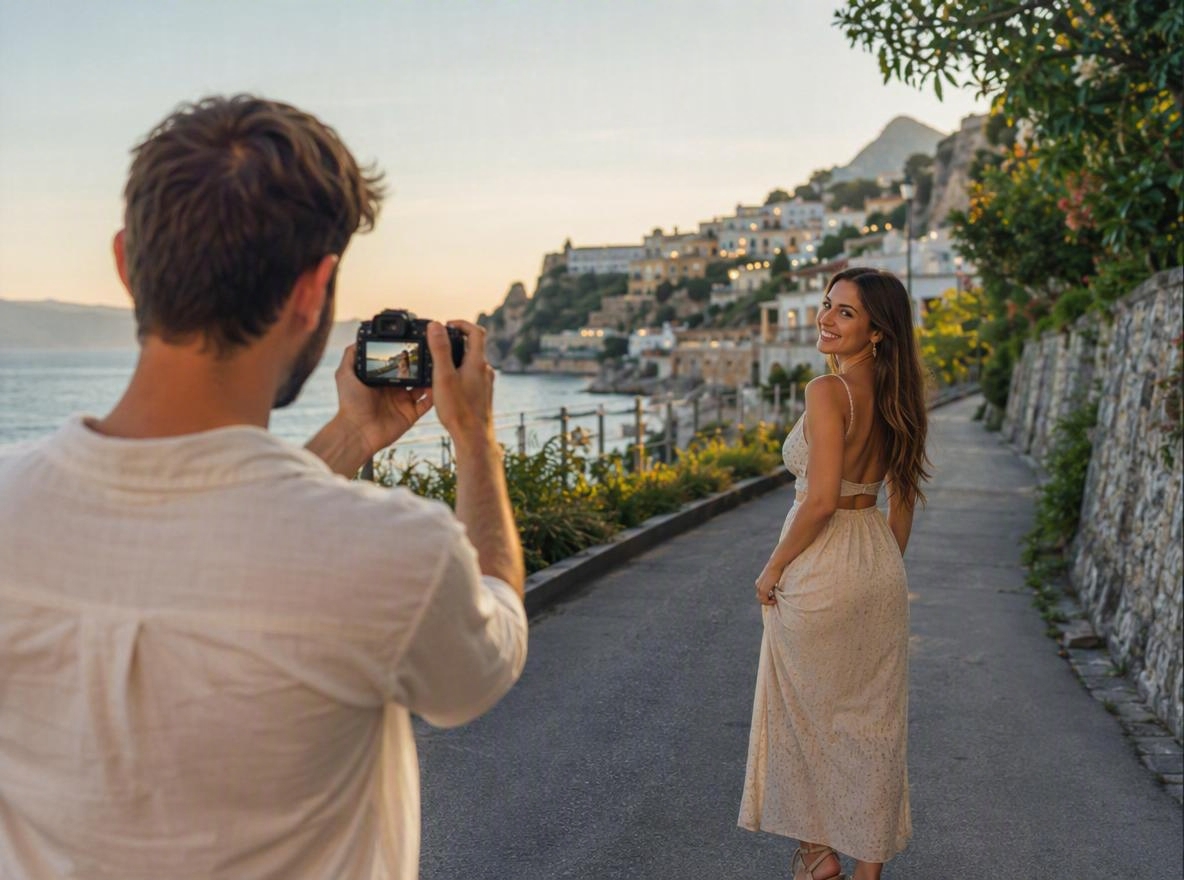
Looking more natural in photos isn't about hiding who you are. It is actually about reducing the camera effects that can exaggerate certain features.
Professional photographers rarely rely on a single trick. Instead, they combine good lighting, thoughtful composition and comfortable posing to create balanced, authentic portraits.
Here are a few simple techniques you can use in almost any situation.
Use Soft, Even Lighting
Lighting shapes the way facial features and body contours appear. Whenever possible, you can photograph yourself in:
- Soft window light
- Open shade outdoors
- Golden hour, shortly after sunrise or before sunset
These lighting conditions create gentle shadows and more even skin tones than harsh overhead lights or direct midday sun.
Find a Comfortable Camera Angle
For most portraits, placing the camera at eye level or slightly above creates a balanced perspective. Very low angles may make the body appear larger, while extremely high angles can create unnatural proportions.
Instead of searching for the "perfect" angle, you can experiment with small adjustments until the photo feels natural.
Relax Your Posture
Feeling stiff often shows up in photos. Rather than forcing an exaggerated pose, you can try to:
- Stand tall without tensing your shoulders,
- Keep your neck relaxed,
- Shift your weight naturally,
- Leave a little space between your arms and torso.
Comfort usually looks more natural than trying to pose perfectly.
Step Back Instead of Zooming In
When using a phone, you should avoid standing too close to the camera whenever possible. More balanced proportions will always be created if you take a photo from a greater distance and crop it later than shooting close-up with a wide-angle lens. This simple habit can reduce perspective distortion while giving you more flexibility during editing.
Take More Than One Photo
Even professional photographers rarely rely on a single frame. Changing your expression slightly, adjusting your posture or taking a few extra shots increases the chances of finding an image that feels genuine and relaxed. One photo is only one moment, which definitely doesn't define how you look.
Why Do I Look Bigger in Selfies?
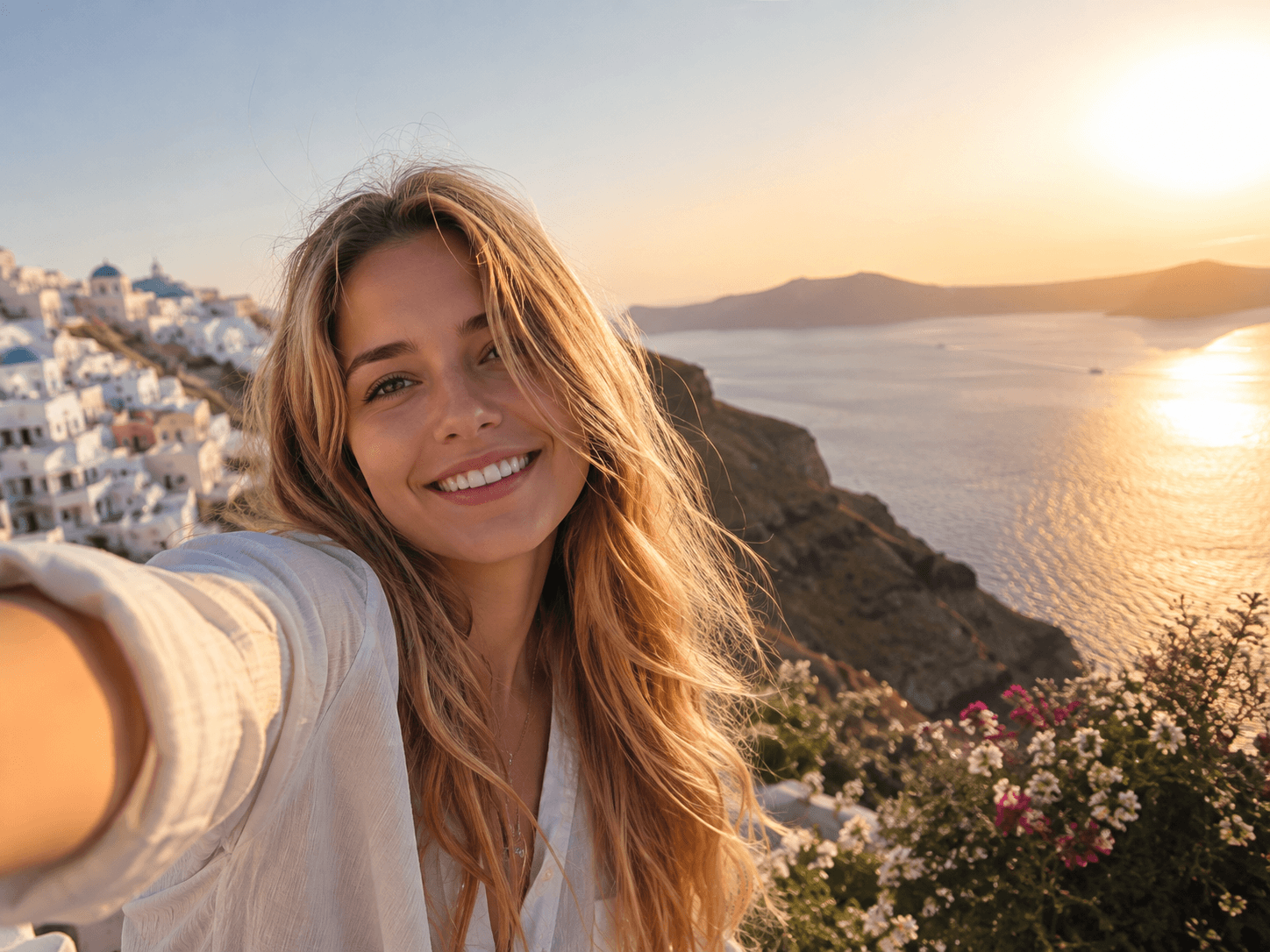
If you have ever noticed that selfies make your face or body look wider than photos taken by someone else, you are not imagining it. Selfies are one of the situations where perspective distortion is most noticeable. Fortunately, a few small adjustments can make a big difference.
Your Phone Is Usually Too Close
The biggest reason selfies look different is camera distance. When you hold your phone at arm's length, the lens is often only 30 to 50 centimeters from your face. At that distance, facial features closest to the camera appear larger, while features farther away appear slightly smaller, which can make your face look rounder or less balanced than it does in person.
Wide-Angle Lenses Stretch Perspective
Most front-facing smartphone cameras use wide-angle lenses. Combined with a short shooting distance, they can exaggerate perspective even further. This effect becomes especially noticeable around the edges of the frame, where faces and bodies may appear slightly stretched.
Simple Ways to Take Better Selfies
Fortunately, selfie improvement doesn't require expensive equipment. You can just try these practical tips:
- Hold your phone slightly farther away and crop the image afterward if needed.
- Use your phone's 2× lens (if available) instead of the standard wide-angle camera.
- Raise the camera slightly above eye level for a more balanced perspective.
- Use a tripod or timer when possible instead of holding the phone close to your face.
- Turn toward soft natural light, such as a window or open shade, to create more flattering shadows.
Reshape and Restore Your Beauty Easily with AI Photo Editor
Photography doesn't end when you press the shutter. Even professional photographers edit their images after the shooting finishes. Editing has always been part of photography, whether it happened in a traditional darkroom or with a modern digital tool.
Instead of changing how someone looks, the goal of editing is to help the final image better reflect what the photographer saw at the moment the photo was taken.
So, when your photos or selfies are seriously distorted, it is wise to use a tool to reshape yourself. Body reshaping used to be a strenuous task with Photoshop. But now, it is really simple to reshape your body and face with Fotor's Reshape photo editor. Upload your photos and simply press and drag the place you unsatisfied to modify and receive your beautiful photos instantly.
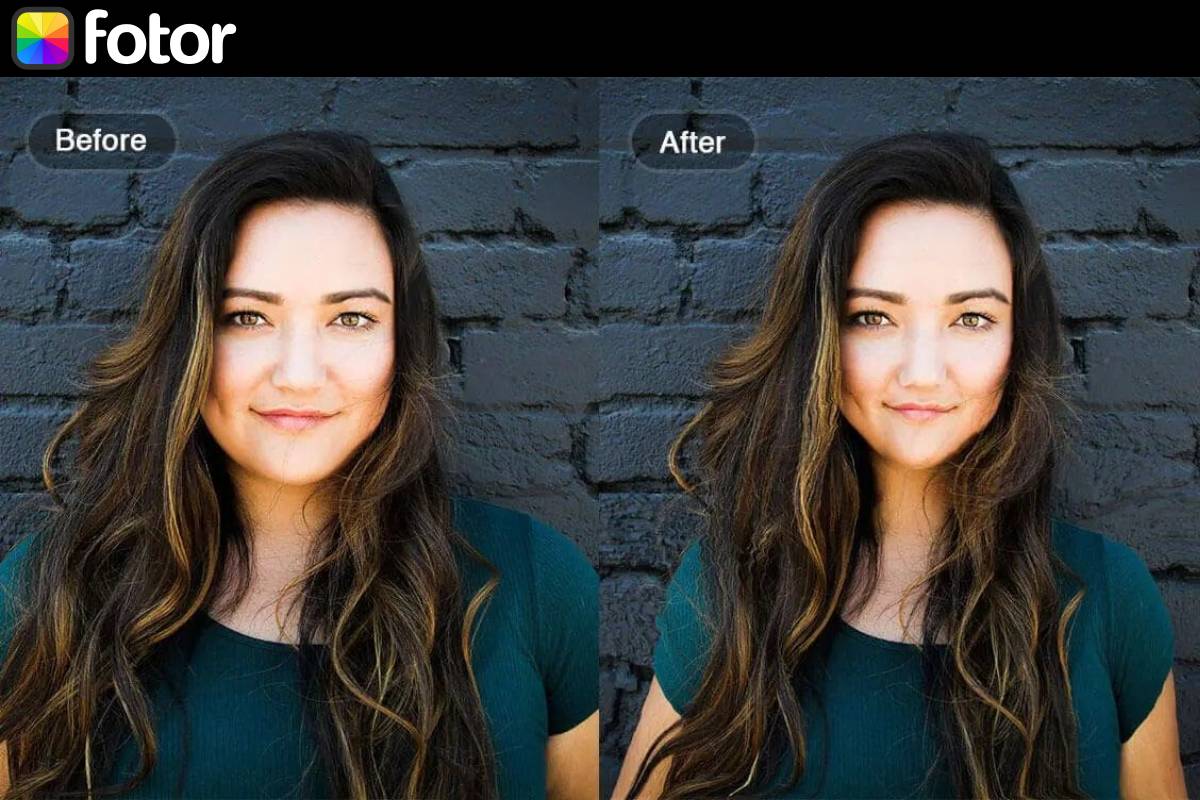
Fotor's Reshape photo editor
Simple and easy to reshape your body and face! Fotor's Reshape photo editor helps you capture a beautiful and perfect photo in a few clicks.
It saves your time to learn other complicated skills. Fotor’s reshape photo editor helps you capture a beautiful and perfect photo and restore your beauty in a few clicks. Let’s see how to do it.
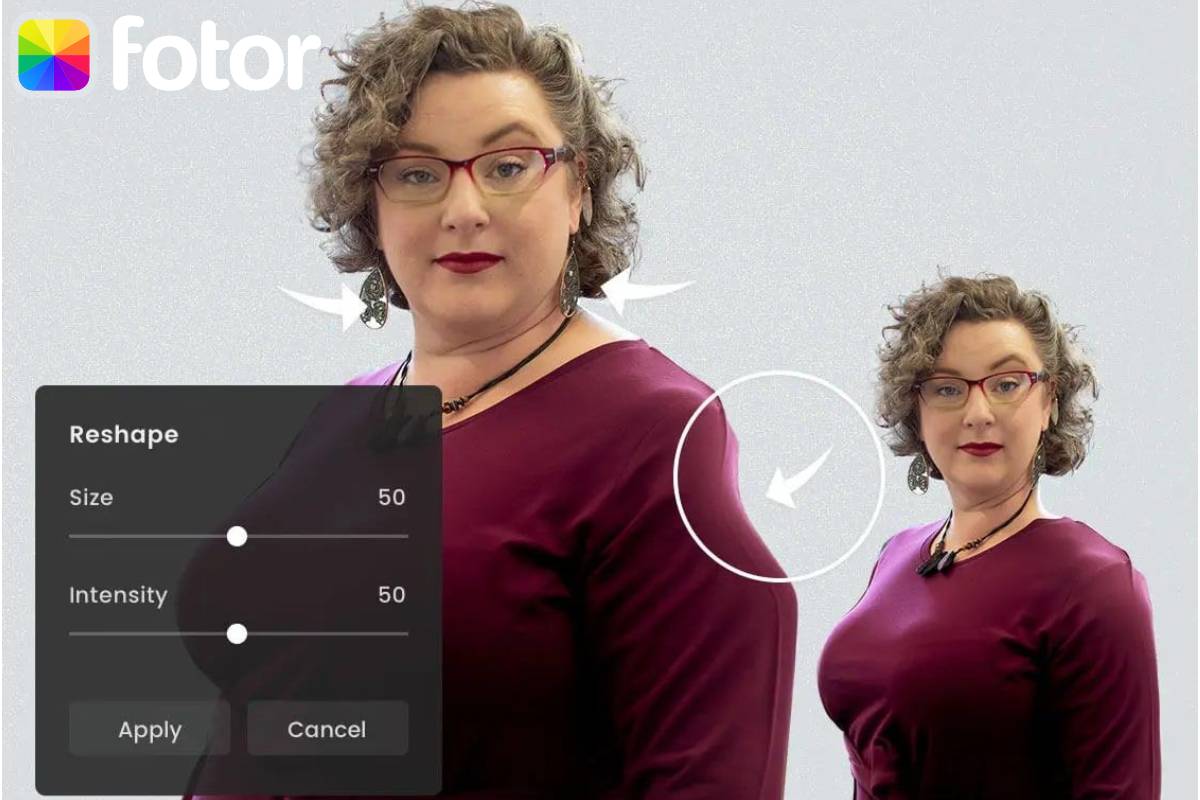
- Turn to Fotor, and click the "Reshape Photos Now" button on this page.
- Click "Open Image" to upload the photo you wish to reshape, or directly drag it to our editing area.
- Use our reshape tool to change your face and body. Press and drag to the place you want to modify.
- You can also adjust the size and intensity of our reshape tool.
- When you maximize your appearance, click the "Download" button to save your reshaped image in JPG or PNG format.
Meanwhile, there are plenty of AI and editing tools in Fotor's AI photo editor to help you polish your portrait photos or selfies. For instance,
You can rely on to undertake simple color corrections, such as,
- Correcting white balance,
- Improving overall exposure,
- Straightening the horizon,
- Cropping unnecessary distractions.
These changes don't alter your appearance; instead, they simply make the image clearer and more balanced.
Also, you can use its object remover to erase uncessary distractions. A portrait with a cleaner background will be more successful because it helps viewers focus on the person instead of the environment.
Furthermore, Fotor provides several beauty filters and photo retouching tools to make effective adjustments, such as balancing skin tones, reducing temporary blemishes or softening harsh shadows. These features help you create a polished look while preserving natural features.
Things to Check Before You Delete That Photo
We have all deleted photos because they didn't feel quite right. Before you do, take a closer look. Sometimes, you are not the problem and it is simply the way the photo was captured. Ask yourself these five questions first.
1. Was the Lighting Working Against You?
A person will appear completely different due to harsh overhead lighting, strong backlighting or uneven indoor lighting. If the lighting isn't flattering, you can try taking the photo again in softer natural light before deciding you dislike the picture.
2. Was the Camera Too Close?
A perspective will often be exaggerated if a photo is taken from a very short distance, which is especially common with selfies. If possible, you should retake the photo from farther away or crop it afterward instead of shooting extremely close.
3. Was the Angle Comfortable?
Camera position matters. A small change in height or direction can lead to a much more balanced image without changing the subject. Sometimes, raising or lowering the camera by only a few centimeters makes a noticeable difference.
4. Is the Background Distracting?
Busy backgrounds usually make photos feel less polished. Before deleting a photo, you may consider if it would improve the overall composition by cropping the unnecessary part or cleaning the background.
5. Could a Few Simple Edits Improve It?
Not every photo needs to be perfect straight out of the camera. Basic adjustments can completely change the final result, such as brightness enhancement, color correction, distraction removal or image cropping. Many photos that initially seem disappointing could become favorites after thoughtful editing.
Final Thoughts
Why do I look fat in pictures? We are sure that you will know the problem is sometimes not you after finishing this post. Also, if you have ever wondered why you look different in photos, you're certainly not alone.
The clothes you wear and the pose you make can leave an impact on what you will look like in photos. Also, the way a camera records perspective, lighting, distance and timing can all influence how you appear in a single image. That's why one photo may feel completely unlike the person you see in the mirror, even though neither tells the whole story.
Rather than judging yourself based on one snapshot, it helps to understand the factors that shape every photograph. Small adjustments to lighting, camera position, shooting distance and composition often have a much greater impact than people expect.
And when a good photo just needs a little refinement, careful editing can make it feel closer to the moment you actually experienced. With the assistance of Fotor's body reshape tool and AI photo editor, you can make simple improvement to help your portrait photo and selfie communicate more clearly without changing your natural appearance.